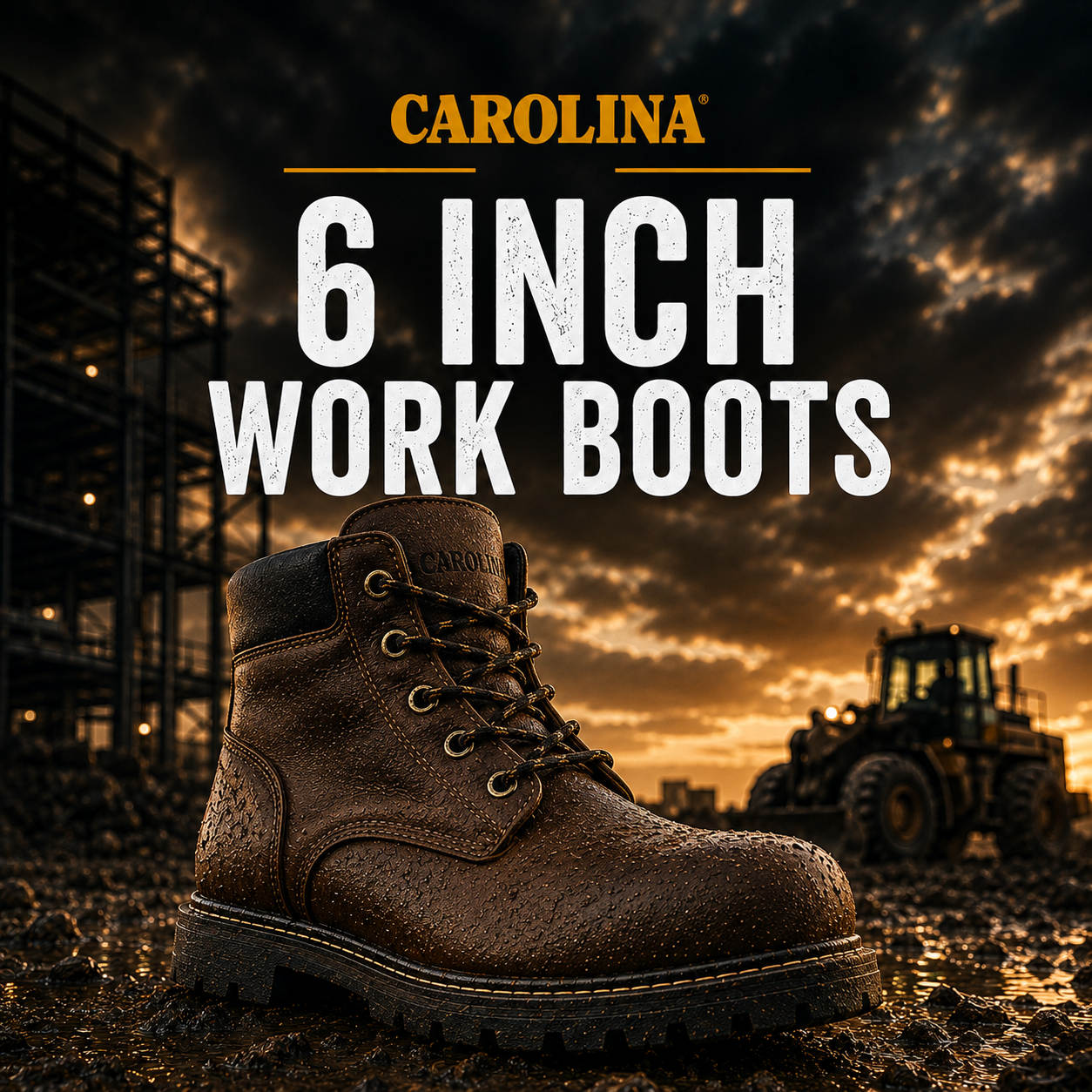
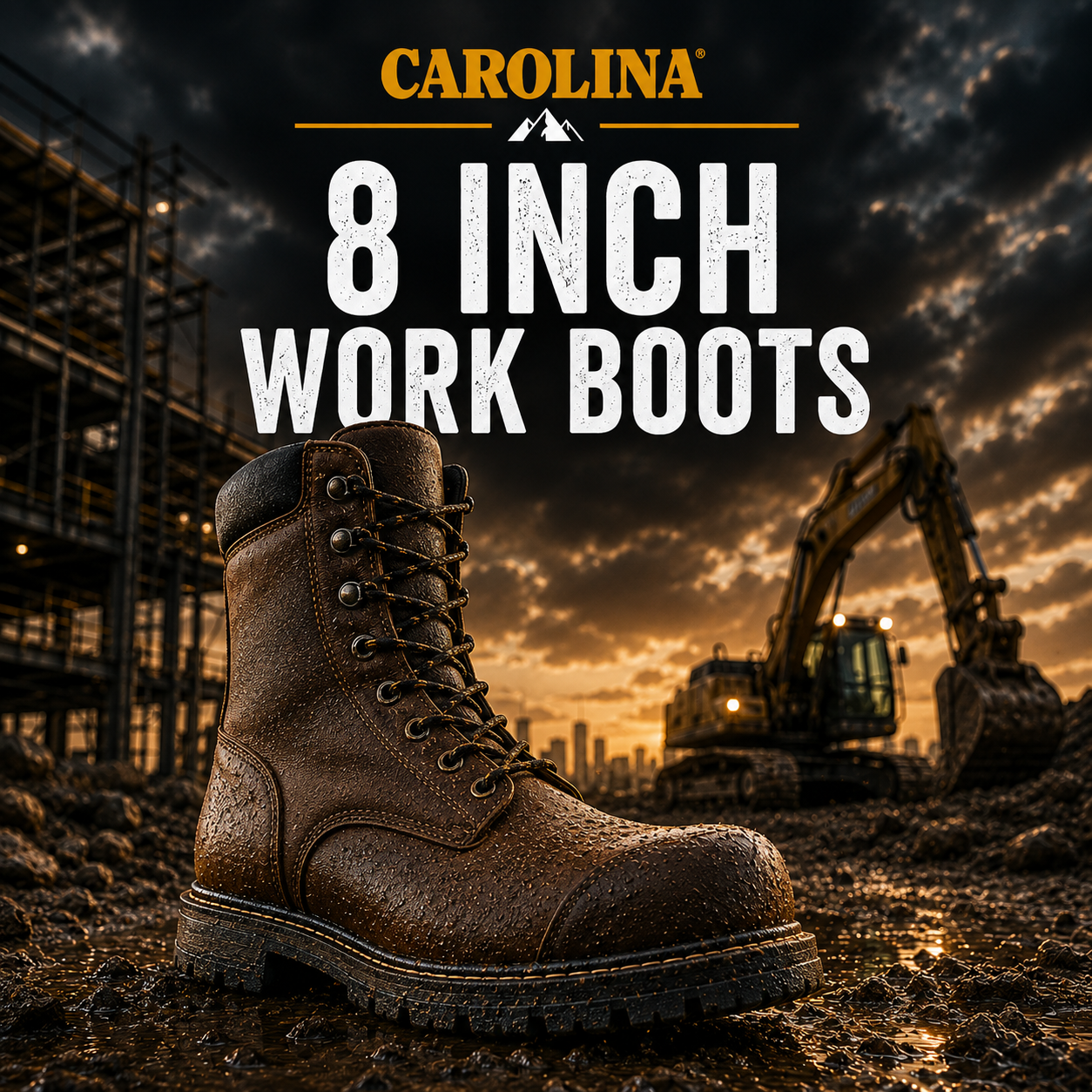
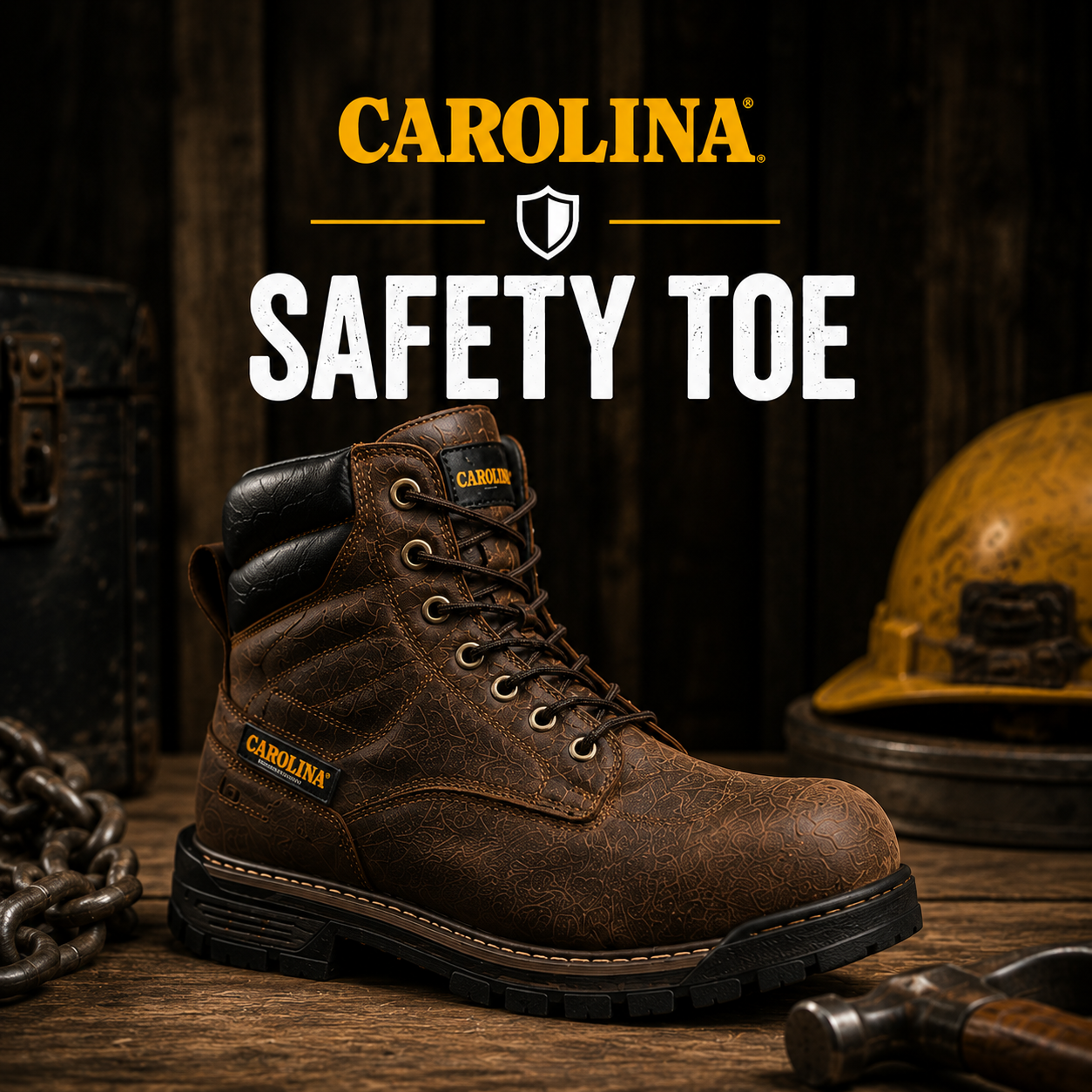
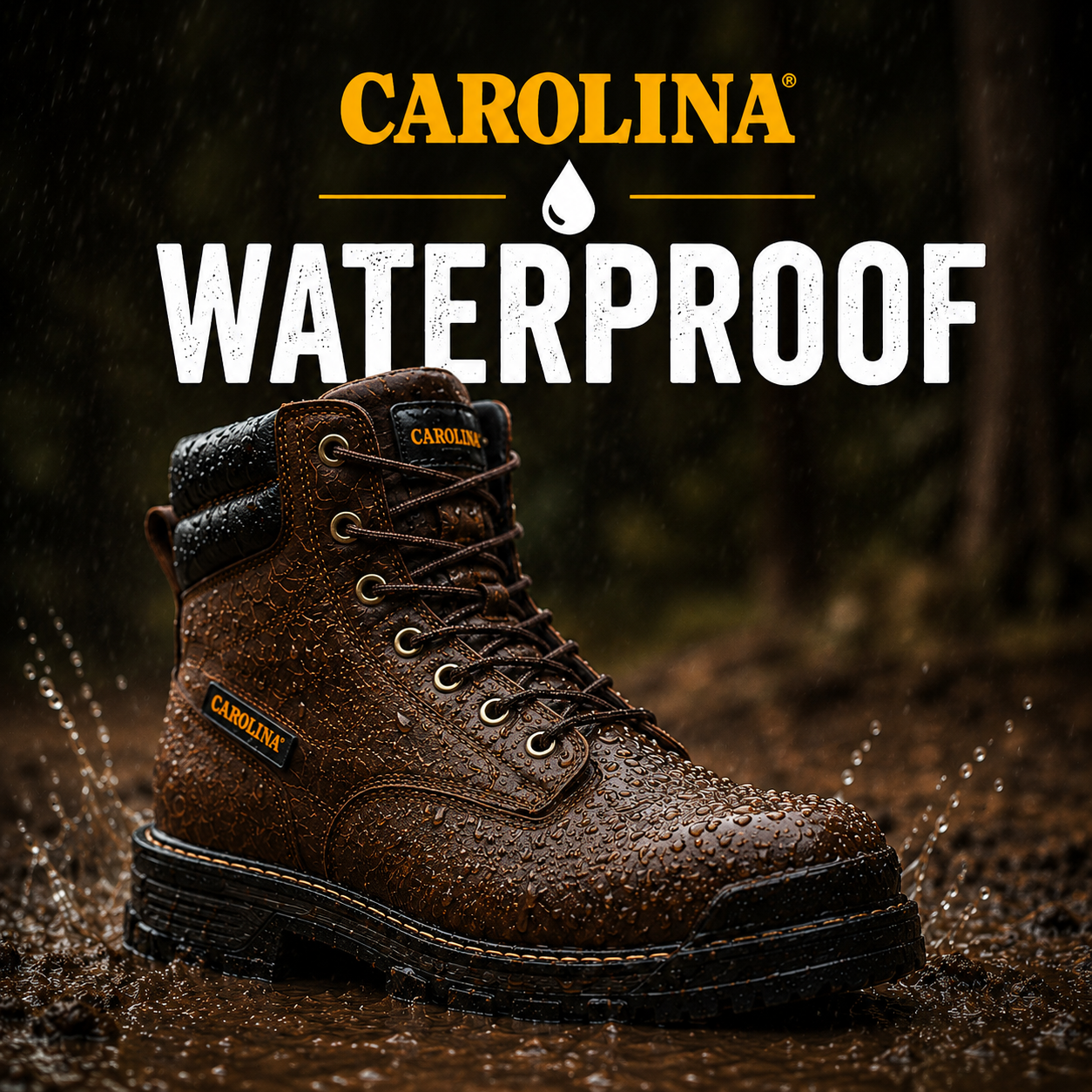
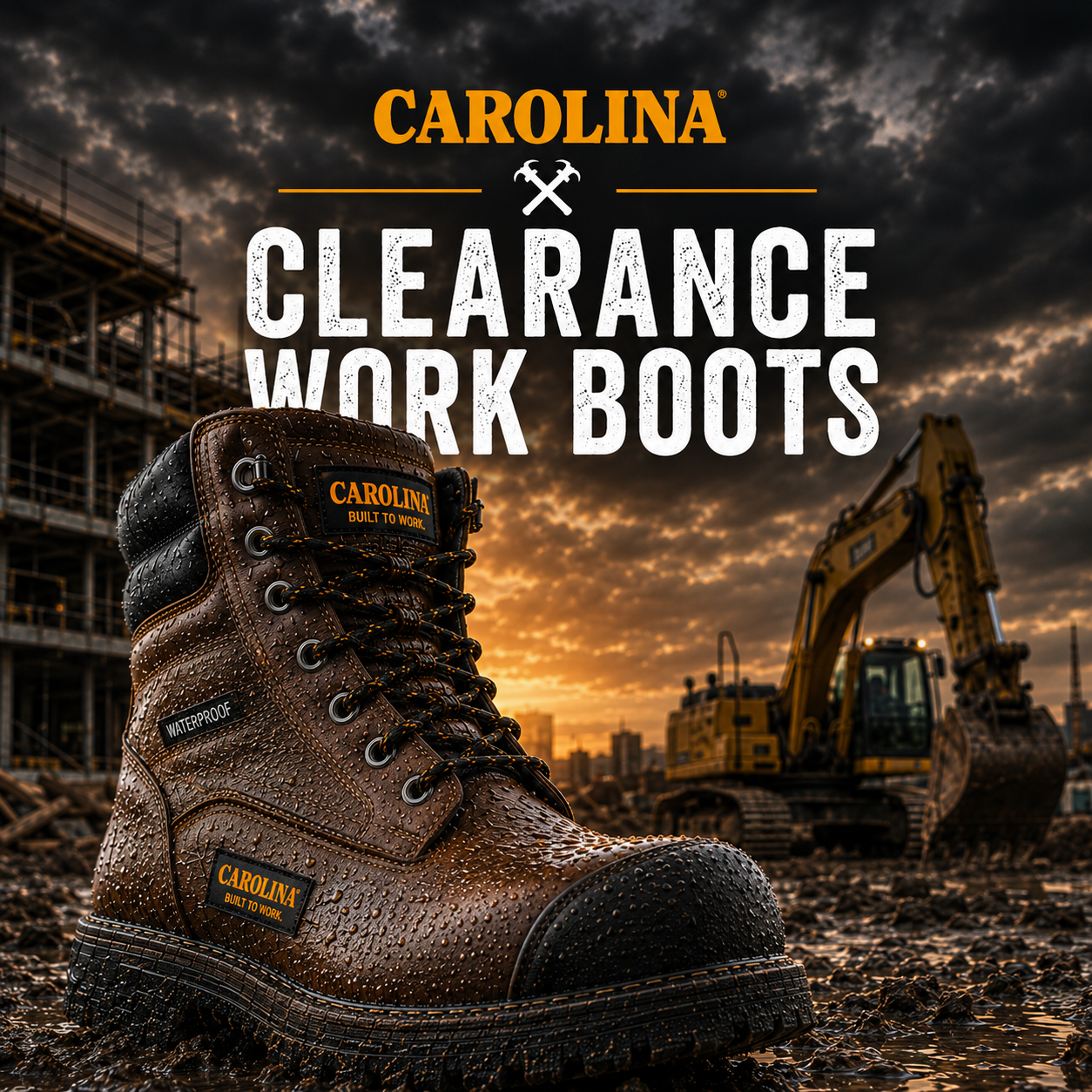
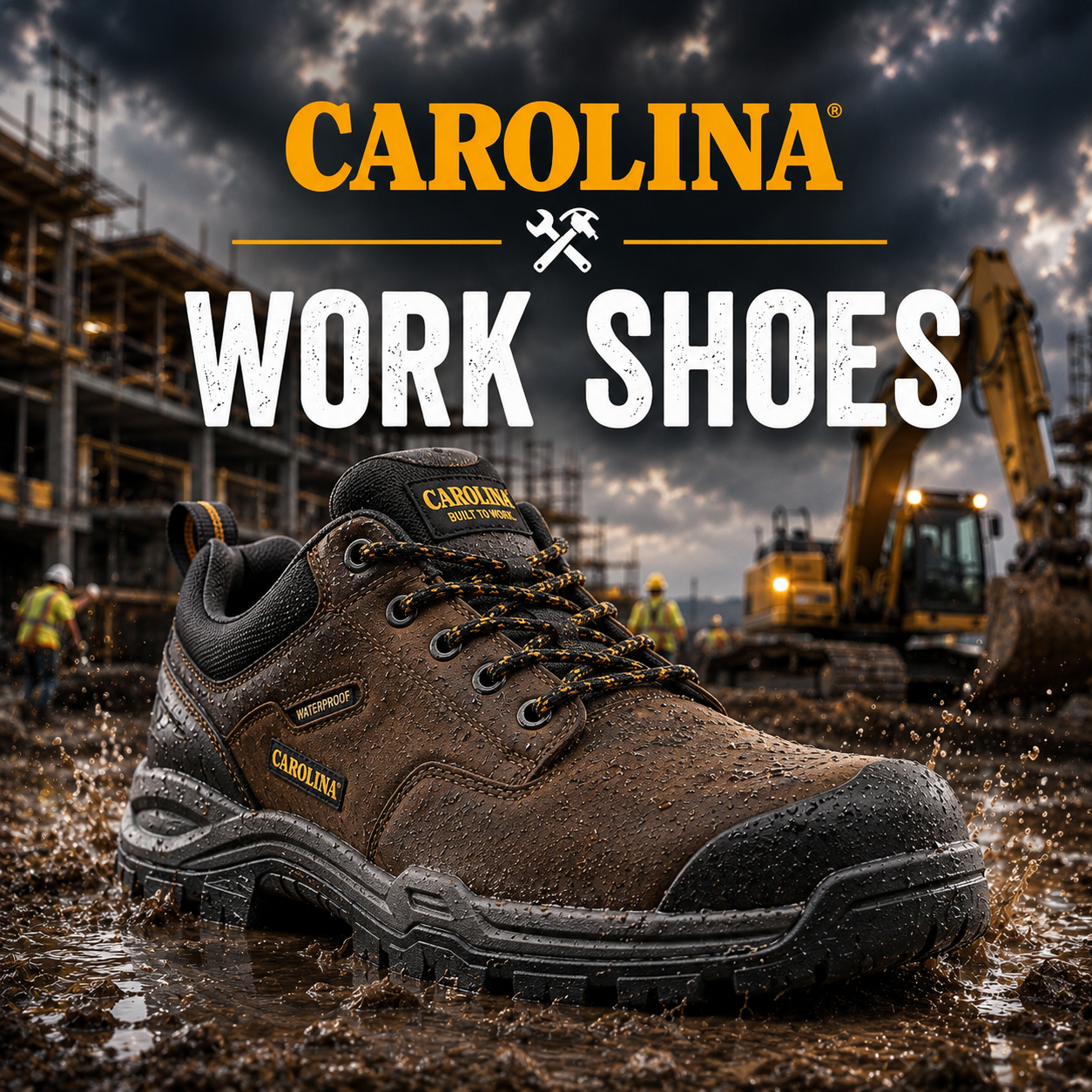
A great all-around light duty boot with an aluminum safety toe - our men’s lightweight ESD aluminum toe hiker.
It's equipped with an oil- and slip-resisting outsole for excellent traction and a removable EVA footbed for comfort underfoot.
Key Features of the Carolina CA5570
-
Aluminum Safety Toe Cap — A metal cap, lighter than steel; meets ASTM F2413 I/C for impact and compression.
-
Static Dissipative (SD) — Absorbs and neutralizes loose electrons, sending charges into the floor; meets ASTM F2413 SD.
-
Neutral Mahogany Leather Upper — Durable leather in a mid-height hiker profile.
-
Mesh Lining & Removable EVA Footbed — Breathable and cushioned.
-
Non-Metallic Shank — A composite alternative to a steel shank, lighter underfoot.
-
Cement Construction & Oil/Slip-Resisting Rubber Outsole — Light, flexible, with dependable traction.
Static Control, Light Duty
SD footwear channels static charge safely into the floor, protecting sensitive components from a discharge through your body. The aluminum toe adds ASTM-rated impact protection without steel's weight.
Hiker Comfort
A mid-height hiker profile and removable EVA footbed keep the boot light and easy on the foot across a full shift on hard floors.
Why Choose the CA5570?
A lightweight, aluminum-toe SD hiker for static-sensitive work — electronics manufacturing, assembly, and clean-adjacent environments.
Similar Styles to Consider
Prefer a slip-on? The S-117 CA5572 is the aluminum-toe SD slip-on. Browse the full Carolina collection at Overlook Boots.
Shop more: Carolina Boots, Alloy Toe Work Boots, ESD Shoes & Boots, Hiker Work Boots
Frequently Asked Questions
What does the SD rating actually measure?
Electrical resistance through the footwear, within a specified window. Under the SD35 standard, resistance must fall between roughly one million and thirty-five million ohms — conductive enough to bleed static away, resistive enough not to make you a fast path to ground.
Can I replace the footbed with my own orthotic?
Carefully. Carolina notes that in an SD-necessary environment, any replacement insole or orthotic must itself be SD — and even with an SD insole, the shoe may no longer test SD. If your workplace requires a verified reading, check with your safety officer before swapping the footbed.
How do I look after SD footwear?
Carolina notes that SD footwear worn in static-dissipative environments requires special care to hold its rating. Keep the outsoles clean and free of insulating buildup, and follow Carolina's care guidance for the style.
How does an aluminum toe compare to steel and composite?
All three meet the same ASTM I/C thresholds. Steel is the thinnest and least expensive, but the heaviest. Aluminum is markedly lighter than steel and nearly as thin, so it preserves toe-box room. Composite is the only fully non-metallic option and the warmest in winter, though bulkier at the same rating.
How does the S-117 CA5570 fit?
It runs true to size — order the size you wear in athletic shoes, and choose Wide if you normally need an EE width. The aluminum toe is thinner than composite for more toe-box room, and cement construction flexes from the first wear.
How does the CA5570 compare with the CA5572?
Both are S-117 aluminum-toe styles. The CA5570 is the mid-height hiker boot; the CA5572 is the S-117 as a slip-on work shoe.