Save 38%
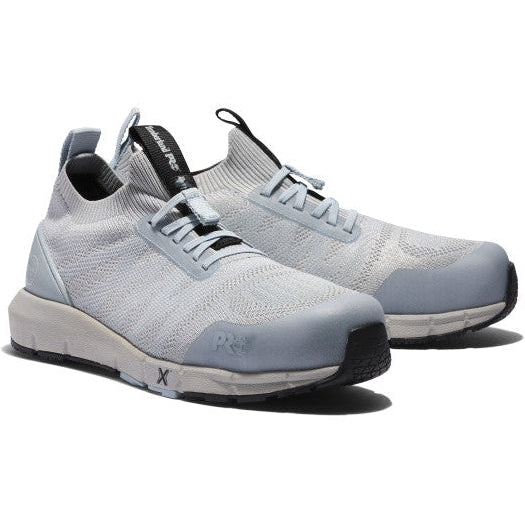
Sale price$90.00
Regular price$145.00
Timberland Pro Women's Radius Knit Composite Toe Slip On Work Shoe - TB0A2CDF065


Save 18%
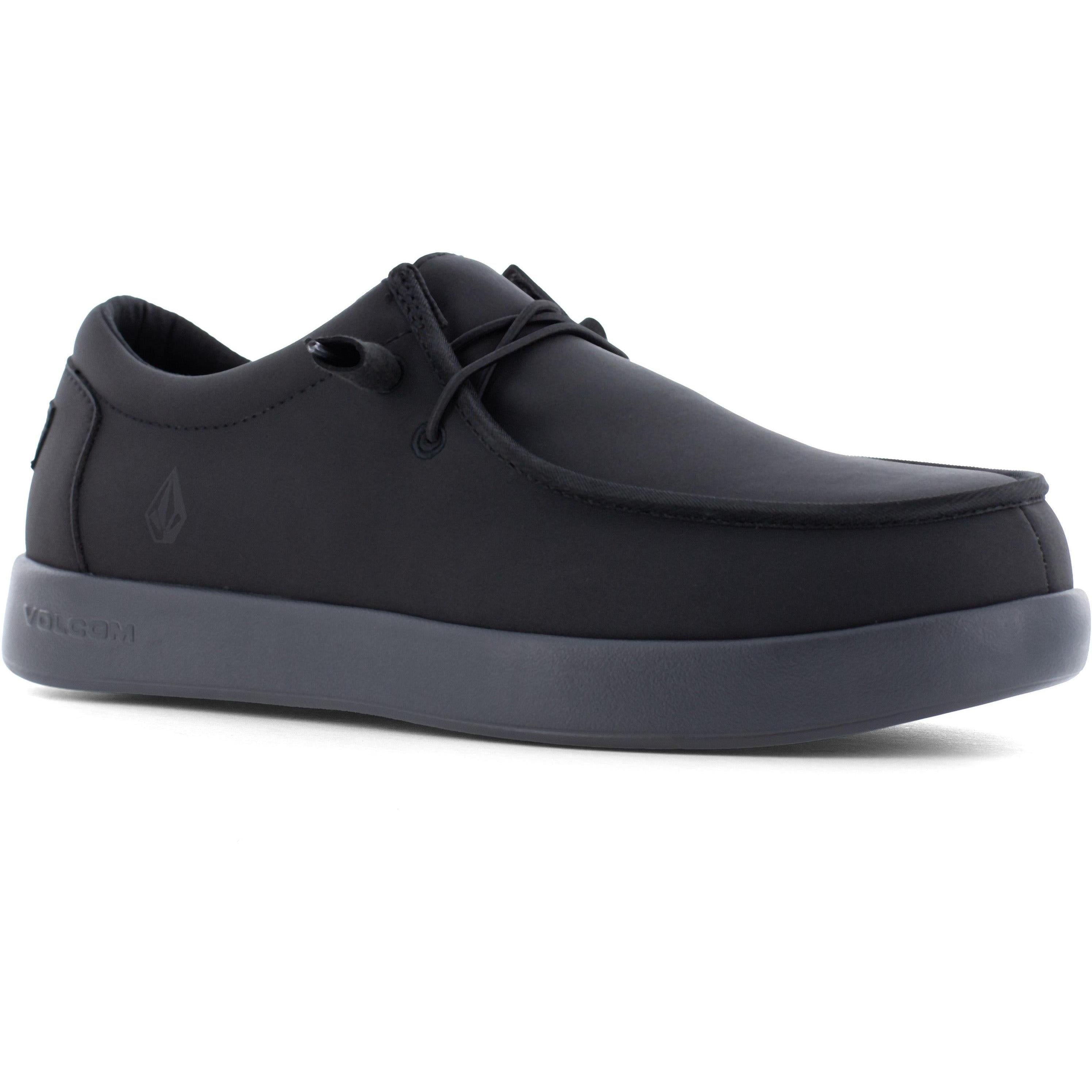
Sale price$114.95
Regular price$140.00
Volcom Women's Chill Comp Toe Slip On Casual Work Shoe- Black- VM30811F
Save 17%
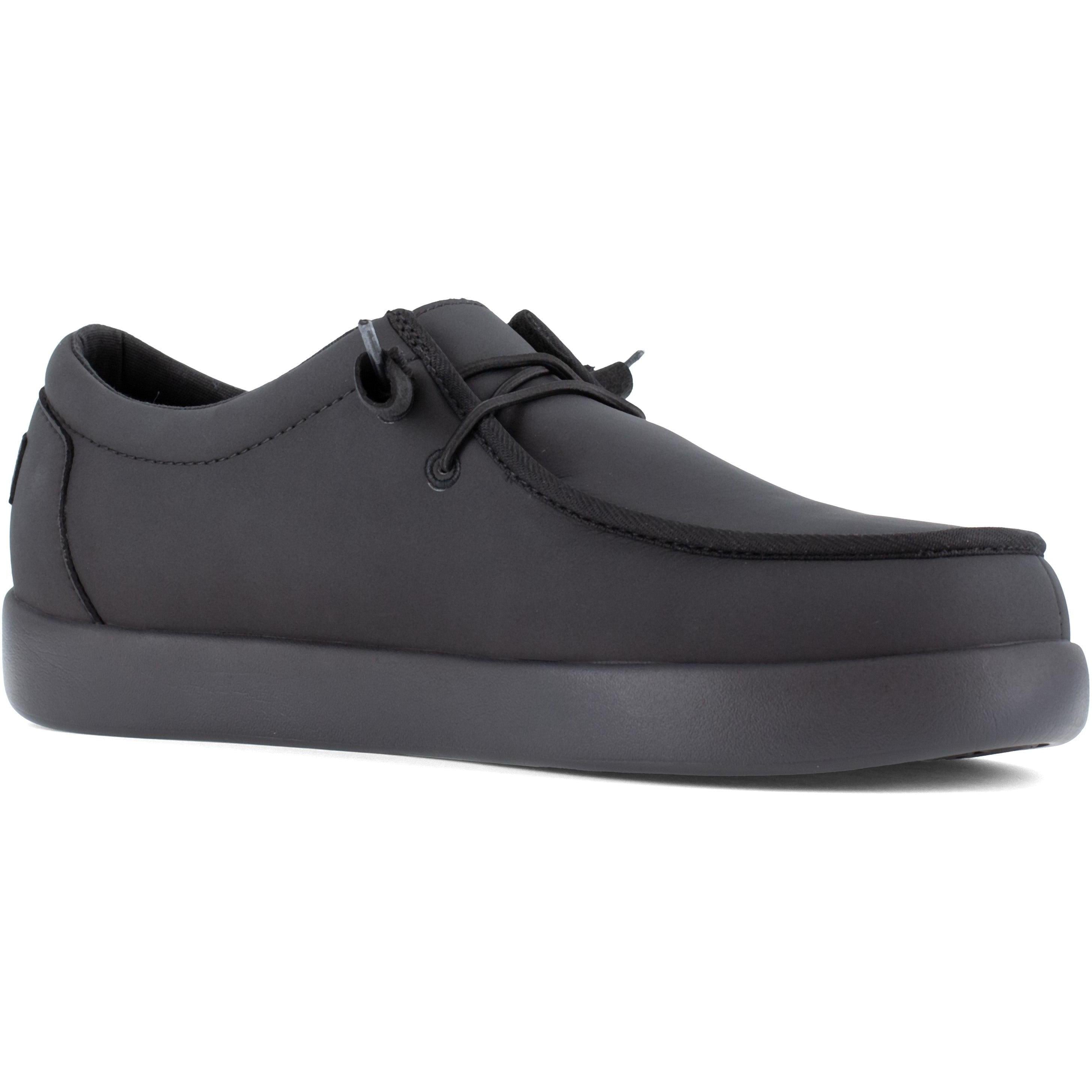
Sale price$109.95
Regular price$132.00
Volcom Women's Chill Comp Toe Slip On Casual Work Shoe- Black- VM30810F
Frequently Asked Questions
Less adjustable, since there is no lacing to snug the instep or lock the heel down, so fit at purchase matters far more. They are faster on and off, which suits roles where shoes come off at a threshold. If your feet swell substantially over a shift, a lace-up handles that change better.
Snug from the start, because nothing will tighten later and elastic gores relax rather than firm up over time. If your heel lifts noticeably when new, the shoe is too big and will only get looser. Try them on late in the day when your feet have swollen, wearing the socks you will actually work in.
Some do, in steel, composite, and alloy on the rated models, meeting ASTM F2413 for impact and compression. Others are soft toe for roles with no crush hazard. The silhouette gives no clue either way, so toe type is stated in every product title and is worth reading before ordering.
Many are, and the naming confuses people: slip-on describes how the shoe goes on, slip-resistant describes the outsole. They are unrelated. If you need grip on wet floors, look for a stated slip-resistance rating rather than assuming the style implies it. See our women's slip-resistant boots range.
Healthcare, hospitality, food service, retail, and light industrial work on flat indoor floors, plus any role where you are in and out of a vehicle or a building repeatedly. They are not the right tool for uneven ground, ladders, or anywhere debris can get in over the low collar.
Height and coverage. A slip-on is a low shoe; a Chelsea is an ankle boot with elastic side gores. Both are laceless. The Chelsea keeps more debris out and gives a little ankle coverage. Choose the shoe for indoor flat floors and the boot if you need coverage. See our women's Chelsea work boots range.
Yes, and it is usually what ends the shoe rather than the sole or upper. Gores lose tension over time, faster if the shoe is a struggle to pull on and the elastic is stretched hard daily. Getting the size right extends their life considerably, and once they go slack the shoe cannot be economically repaired.
It depends on the midsole rather than the closure. A cushioned slip-on handles a shift on flat floors as well as any low shoe. What you cannot do is adjust the fit as your feet swell, which is the main practical limitation over a long day.
Recently viewed
Our Top Brands