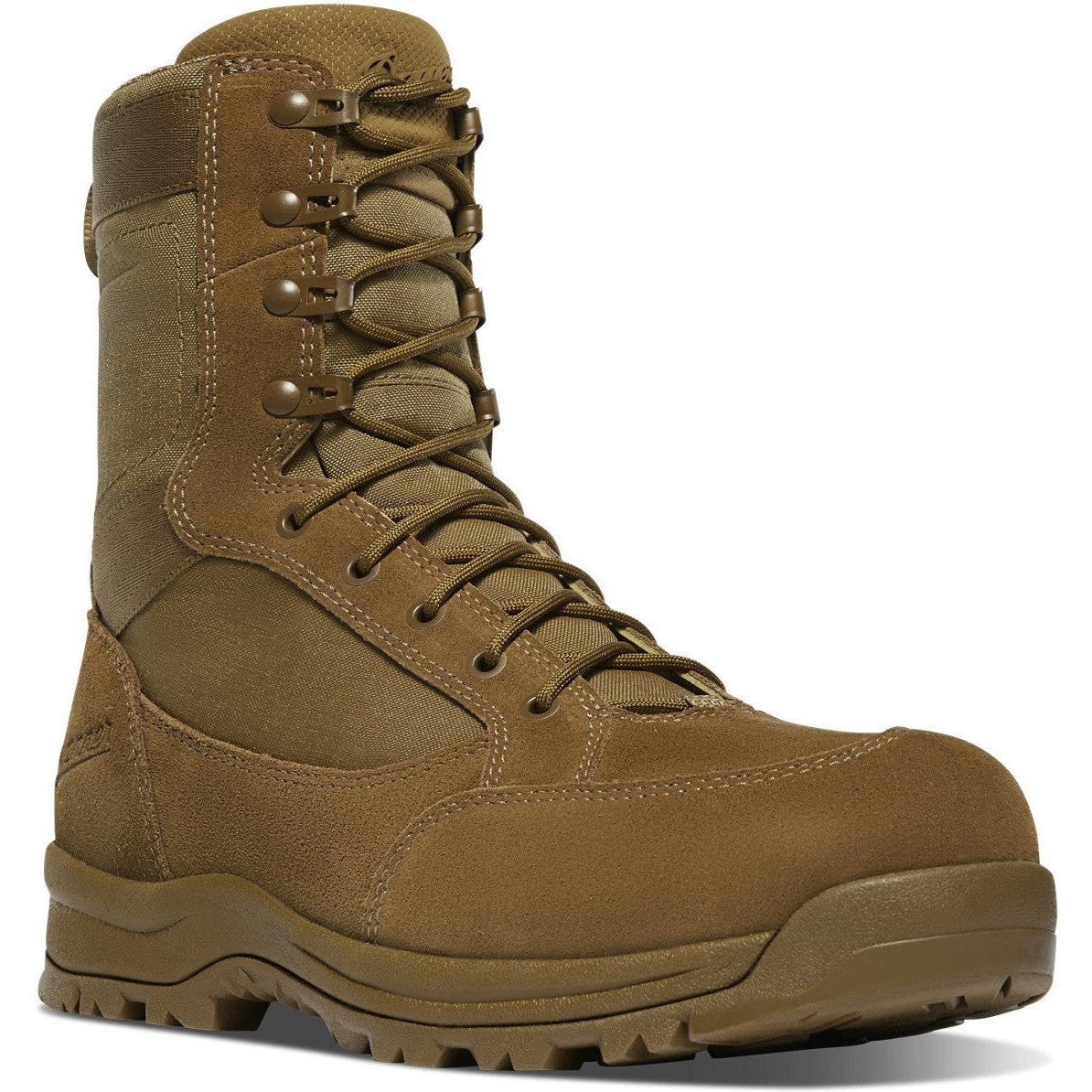
Sale price$229.95
Regular price$240.00
Danner Men's Tanicus 8" Composite Toe Waterproof Side Zipper 400G Military Boot -Coyote- 55325
Save 14%
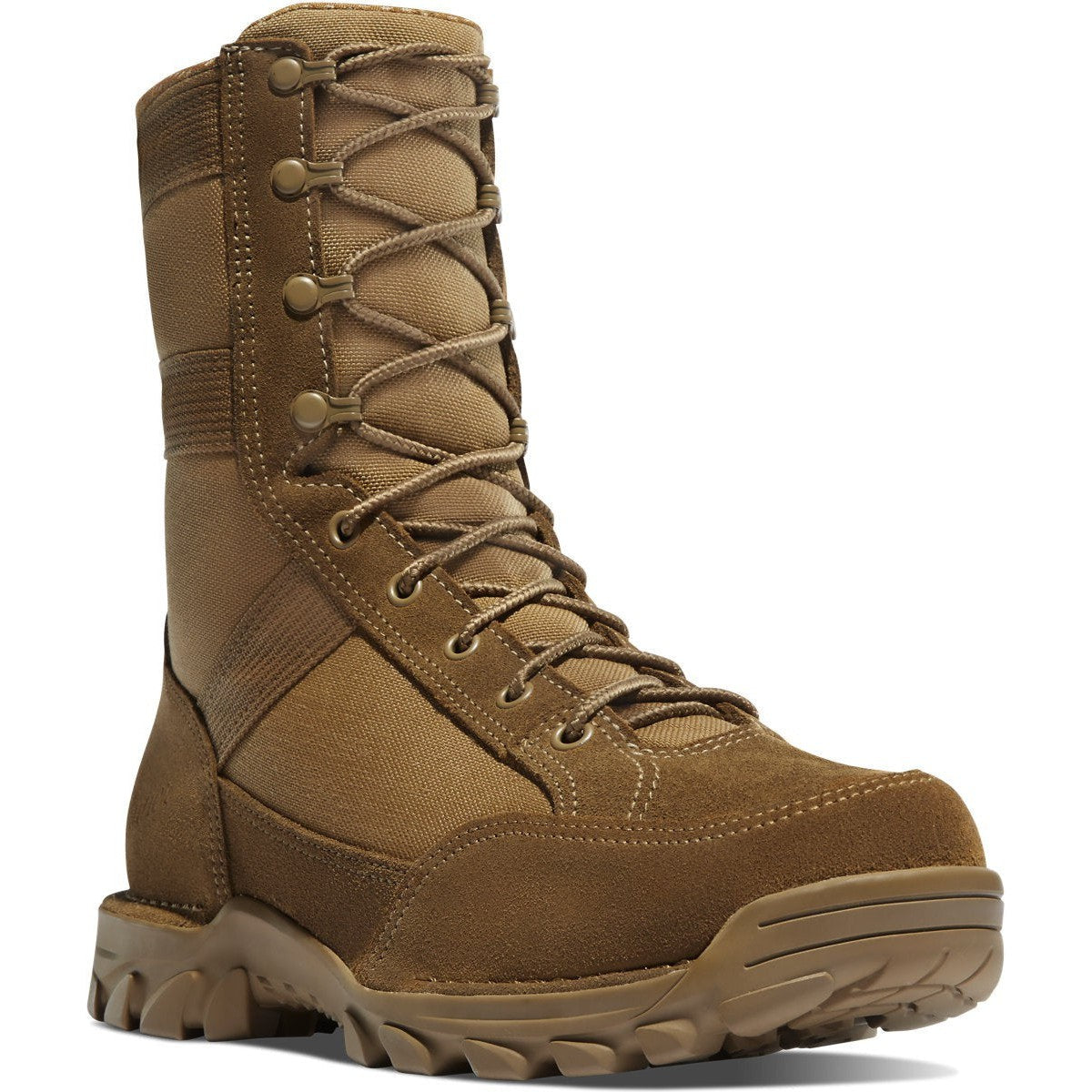
Sale price$509.95
Regular price$590.00
Danner Men's Rivot TFX 8" Plain Toe Waterproof 400G Military Boot -Coyote- 51514
Save 5%
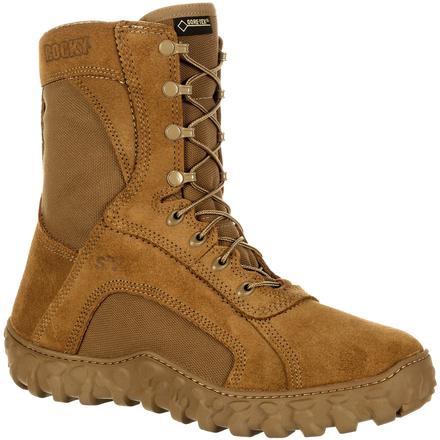
Sale price$352.00
Regular price$372.00
Rocky Men's S2V Gore-Tex Waterproof Insulated Military Boot - Brown- RKC055
Save 6%
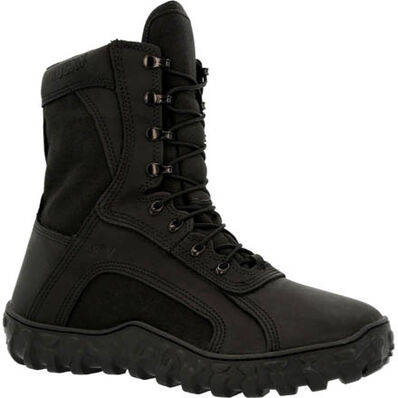
Sale price$340.00
Regular price$360.00
Rocky Men's S2V 8" Soft Toe Waterproof 600G Ins USA Made Tactical Military Boot- RKC079
Save 8%
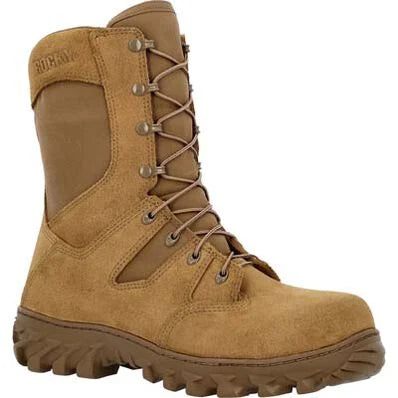
Sale price$244.00
Regular price$264.00
Rocky Men's S2V Predator Composite Toe 400G Insulated Military Boot- RKC145
Save 6%
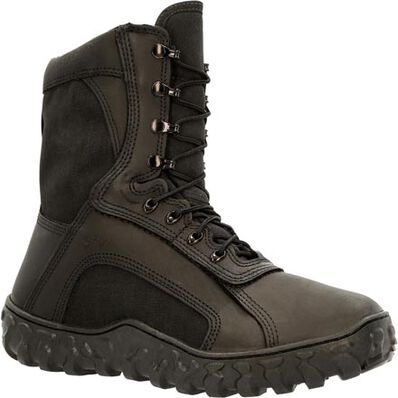
Sale price$338.00
Regular price$358.00
Rocky Men's S2V 8" Soft Toe Waterproof 400G Ins USA Made Tactical Military Boot- RKC078
Frequently Asked Questions
Match it to how much you move, not to the temperature. Two hundred grams suits active cold-weather work. Four hundred handles standing with intermittent movement. Eight hundred and above is for genuinely stationary posts in hard cold. The common error is buying the warmest available, then sweating while active and getting cold once you stop, because damp insulation stops working.
Usually sweat, and sometimes circulation. If you are active in heavily insulated boots your feet perspire, the moisture saturates the insulation, and it loses most of its value the moment you stop. Boots laced too tight restrict blood flow, which has the same effect. Wool socks that wick, and boots sized to allow some air space, both help more than adding insulation does.
For multi-day cold, meaningfully yes. A removable liner comes out to dry overnight, so you start the next day with dry insulation, while a sealed insulated boot never fully dries and gets progressively colder. That is the whole argument for a pac boot. For single shifts with a warm place to dry out afterward, a sealed boot is fine. See our pac boots range.
Yes, in almost every case, since snow melts against a warm boot and wet feet in cold conditions are how cold injuries start. The trade is breathability, which matters less in cold weather than in heat because the humidity gradient works in your favor. Waterproof status is stated in every product title.
Cold-rated rubber compounds that stay flexible below freezing, since standard rubber hardens and loses grip in the cold. Tread pattern matters less on ice than compound does. For genuine ice, no outsole is a substitute for a traction device fitted over the boot. See our traction devices range.
Slightly looser than a summer boot, sized to allow thicker socks and a little air space, because dead air is part of how insulation works and a tight boot restricts circulation. Buying your normal size and then adding heavy socks is the classic mistake, and it makes your feet colder than thinner socks in a properly sized boot would.
Some are and some are not, since this collection covers duty and outdoor cold-weather boots as well as regulation military models. Uniform regulations specify color, height, and finish, and cold-weather boots do not automatically comply. Check the specific model against your current requirement. See our U.S. Army boots range.
Insulated boots, if the cold is real. Thicker socks in a boot sized for thinner ones compress and restrict circulation, which makes feet colder rather than warmer. Socks are the fine adjustment; the boot and its insulation do the actual work. Get the boot right first, then use sock thickness to tune it.
Recently viewed
Our Top Brands