Save 6%
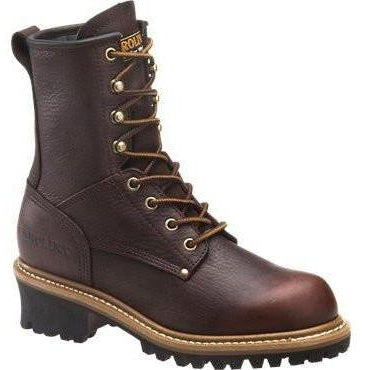
Sale price$154.99
Regular price$165.00
Carolina Women's Elm 8" Steel Toe Logger Work Boot - Brown - CA1421
Save 6%
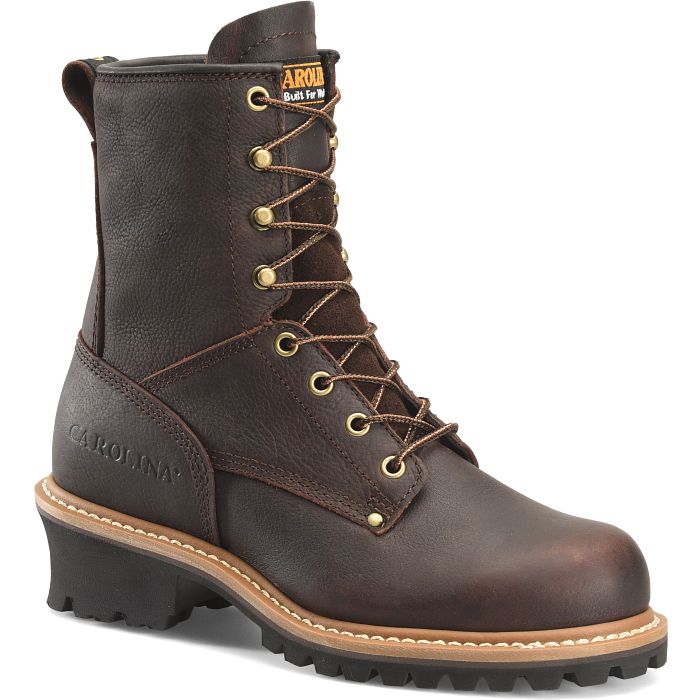
Sale price$149.99
Regular price$160.00
Carolina Women's Elm 8" Logger Work Boot - Brown - CA421
Save 5%
Sale price$180.00
Regular price$190.00
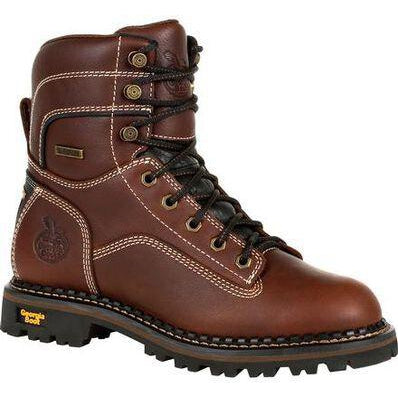
Georgia Women's Amped Lightweight Logger Alloy Toe Waterproof Work Boot - Brown - GB00428
Frequently Asked Questions
Three things. A defined raised heel, usually around two inches, that digs into slopes and hooks ladder and pole rungs. A deep lugged outsole that sheds mud instead of packing with it. And a taller shaft, typically 8 or 9 inches, that keeps debris out and braces the ankle. General work boots trade all three for a flatter, lighter boot on level ground.
Loggers are a specialist boot for forestry, utility, and climbing work, and manufacturers have historically built them on men's lasts only. The narrow women's range reflects what exists rather than how this page is filtered. If nothing here fits, our full logger boots range covers the men's models.
No, and choosing one for flat indoor work is a common mistake. The raised heel concentrates your weight rather than spreading it, and the heavy build adds weight, both of which work against you on hard flat ground. A wedge sole spreads weight across the whole footprint and is far more comfortable there. See our wedge sole work boots range.
Forestry and timber crews, arborists, linemen and utility workers who climb, and anyone working steep, muddy, or broken ground where footing changes constantly. Ranch and pipeline work also fits. If your ground is level and predictable, you are carrying heel height and weight you gain nothing from.
It is a working feature. On a slope it digs in and stops your foot sliding forward. On a ladder or pole step it catches the rung so your arch takes the load rather than your toes. On loose ground it gives you an edge to set. That is also exactly why loggers are tiring on flat concrete.
Most are, reflecting the wet ground they are built for. Waterproof status is stated in every product title. The rest are water-resistant leather, which sheds rain but wets through with prolonged exposure. See our women's waterproof work boots range.
One to three weeks on the welted leather models, longer than most work boots because loggers use heavier leather and a stiffer build by design. The shank and shaft both have to soften. That stiffness is doing a job, so a logger that breaks in very fast is usually not built for real slope work.
The Goodyear welted ones can, and given how hard loggers wear outsoles that is worth paying for. A welt lets a cobbler replace the sole without disturbing the upper. Cemented loggers are not built for it, so check the construction on the product page if you expect to wear the tread down annually.
Recently viewed
Our Top Brands