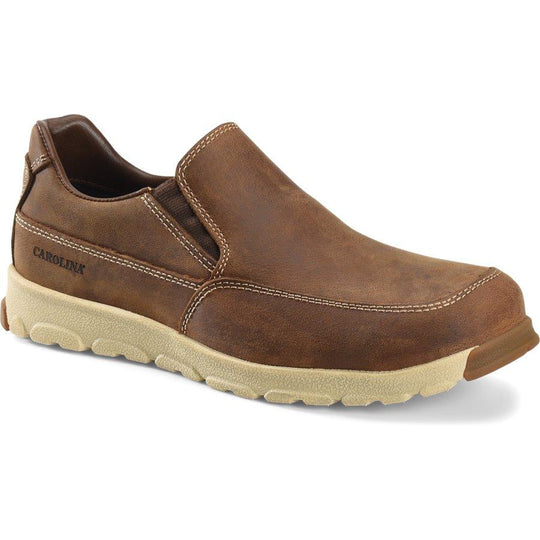
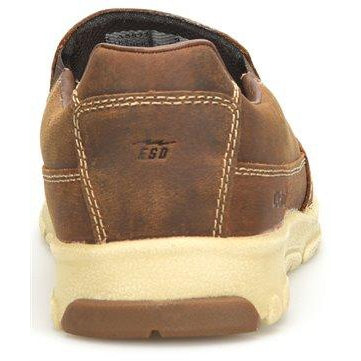
The S-117 CA5572 is a lightweight aluminum-toe slip-on work shoe with static-dissipative (ESD) protection — a great light-duty option with easy on-and-off and dependable traction.
Key Features of the Carolina CA5572
-
Aluminum Safety Toe — A metal cap, lighter than steel; meets ASTM F2413 I/C for compression and impact.
-
Electrostatic Dissipative (ESD) — Absorbs and neutralizes static charges to protect sensitive environments.
-
Neutral Mahogany Leather Upper — Durable leather in a twin-gore slip-on.
-
Removable EVA Footbed — Cushioned comfort underfoot.
-
Mesh Lining — Breathable interior.
-
Non-Metallic Shank — A composite shank that saves weight and flexes with the foot.
-
Cement Construction & Oil/Slip-Resisting EVA & Rubber Outsole — Lightweight, dependable traction.
-
Regular (D) Width — Standard medium width.
- Boot Weight: 5.05 lbs per pair
- Imported
Light-Duty ESD Protection
A lightweight aluminum toe protects at less weight than steel, and ESD construction absorbs and neutralizes static charges — ideal for electronics and other static-sensitive work.
Easy On, Easy Off
The twin-gore slip-on design makes for quick on-and-off at clean-room thresholds and wherever laces are a nuisance, and a removable EVA footbed cushions each step.
Why Choose the CA5572?
A lightweight, aluminum-toe ESD slip-on for light-duty work in static-sensitive environments where laces are a nuisance.
Similar Styles to Consider
Prefer a lace-up composite ESD oxford? See the Braze CA1520, or the carbon composite Duke CA5541. Browse the full Carolina collection at Overlook Boots.
Frequently Asked Questions
How does an aluminum toe compare to steel and composite?
All three meet the same ASTM I/C thresholds. Steel is the thinnest and least expensive, but the heaviest. Aluminum is markedly lighter than steel and nearly as thin, so it preserves toe-box room. Composite is the only fully non-metallic option and the warmest in winter, though bulkier at the same rating.
Can I replace the footbed with my own orthotic?
The EVA footbed is removable, but static-dissipative footwear needs care here. In an SD-necessary environment, a replacement insole must itself be static-dissipative, and even an SD insole can change whether the shoe passes an SD test. Verify with your safety officer before swapping it.
Is ESD the same as Electrical Hazard protection?
No, and they're mutually exclusive. ESD is designed to conduct static charge to ground; EH is designed to insulate you from live circuits. The CA5572 is ESD and offers no EH protection.
How much does it weigh?
5.05 lbs per pair in Regular (D) width — light for a metal safety toe, and noticeably lighter than a comparable steel-toe boot.