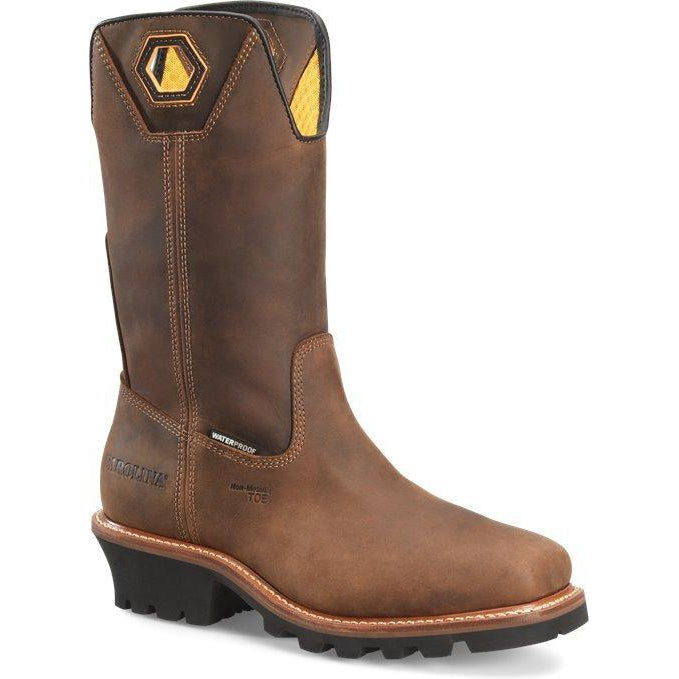
Save 31%
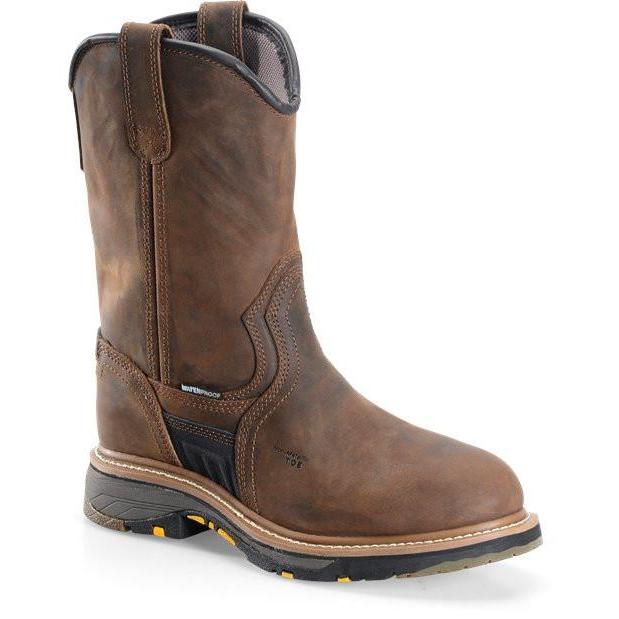
Sale price$148.67
Regular price$214.00
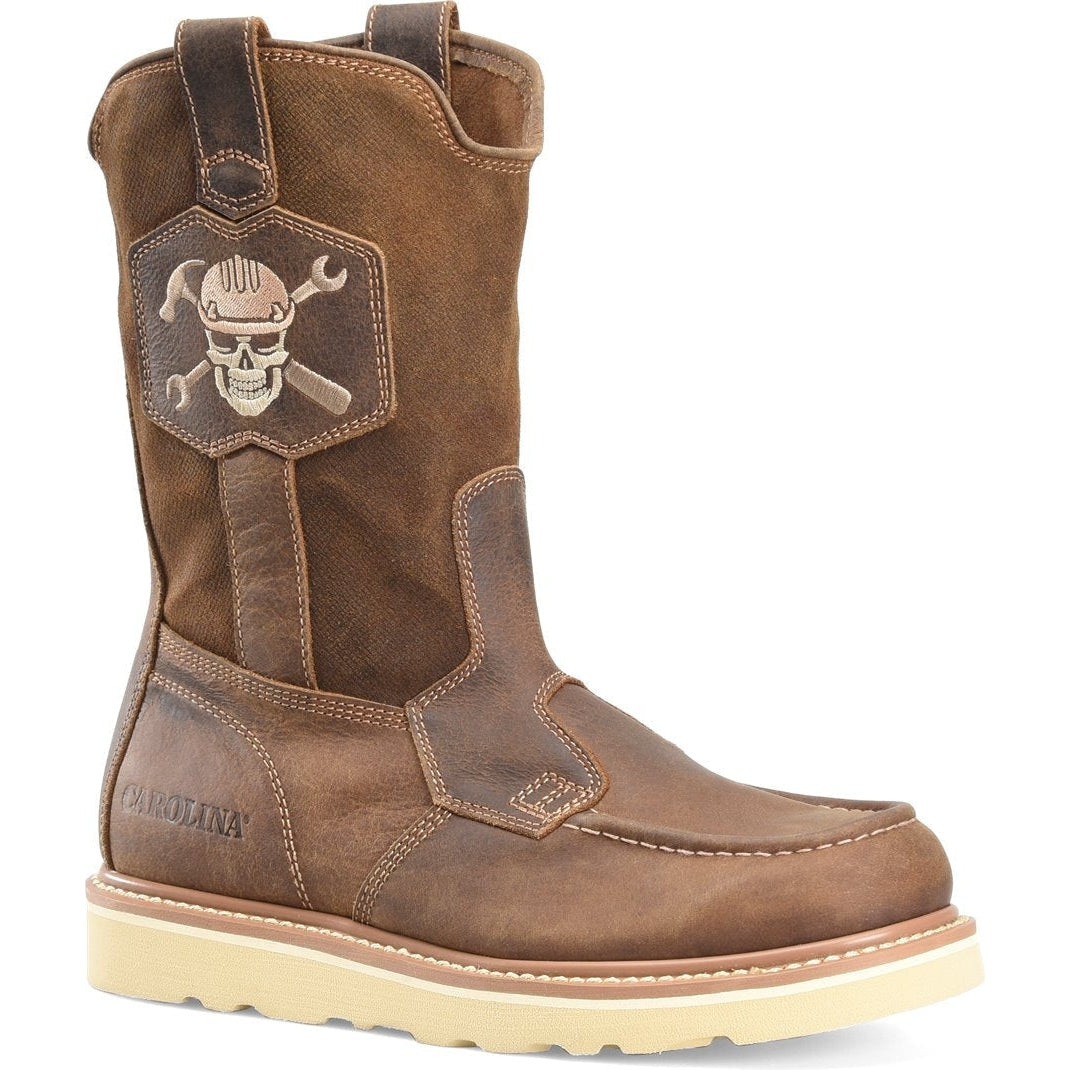
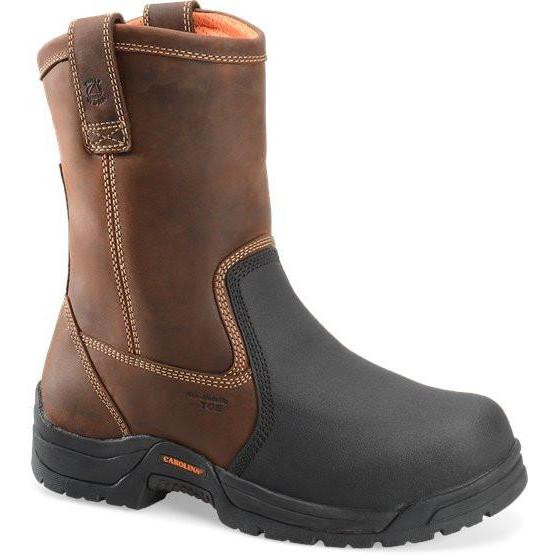
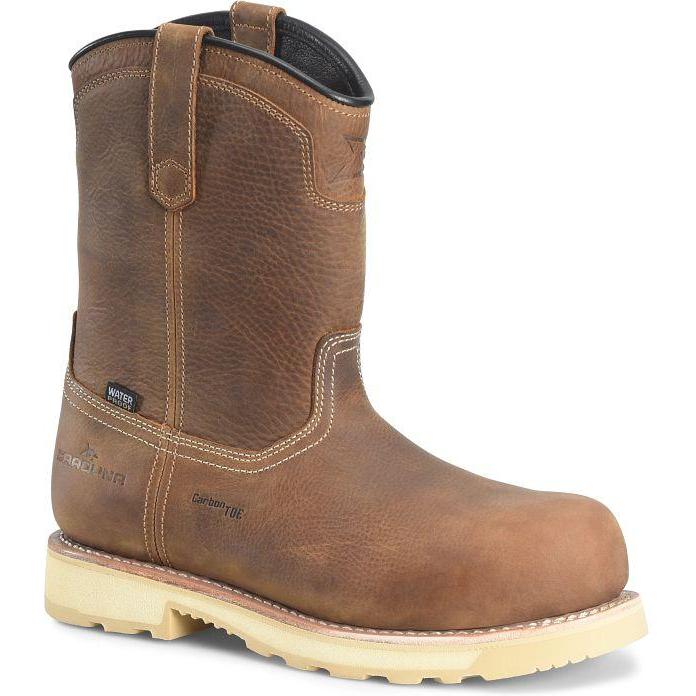
Carolina Men's Well X 10" Composite Toe Waterproof Wellington Work Boot - CA4559
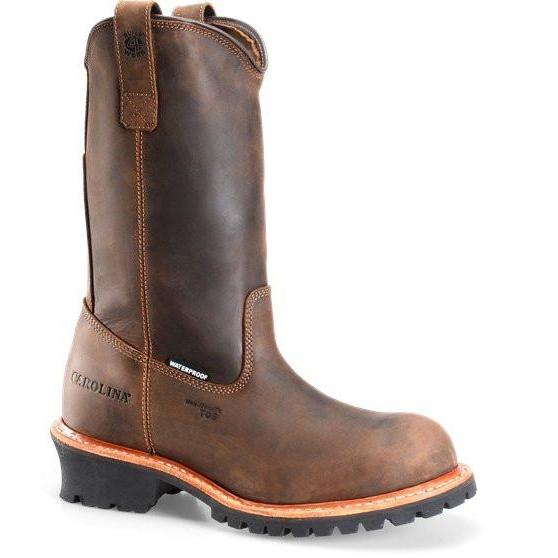
Sale price$209.99
Regular price$214.00
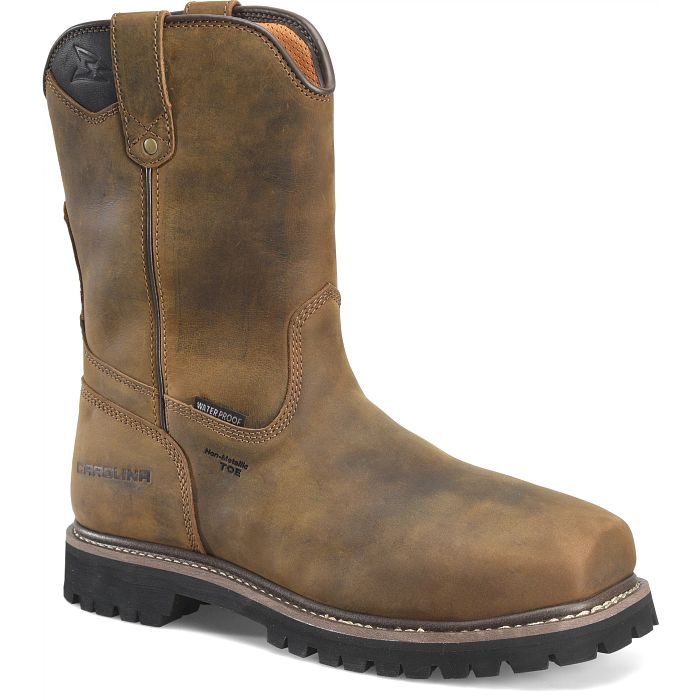
Carolina Men's Well X Metguard Wellington Work Boot - Brown - CA4582

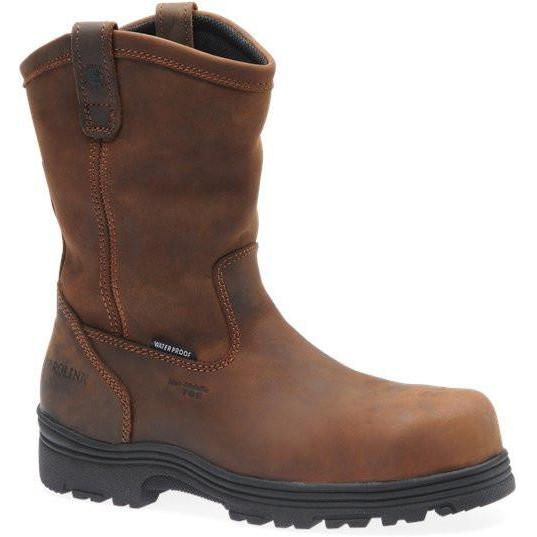
Sale price$204.99
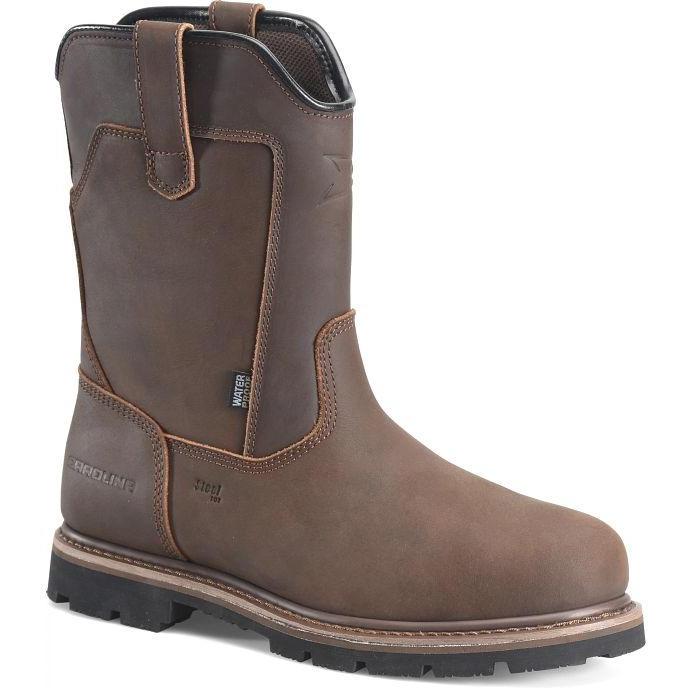
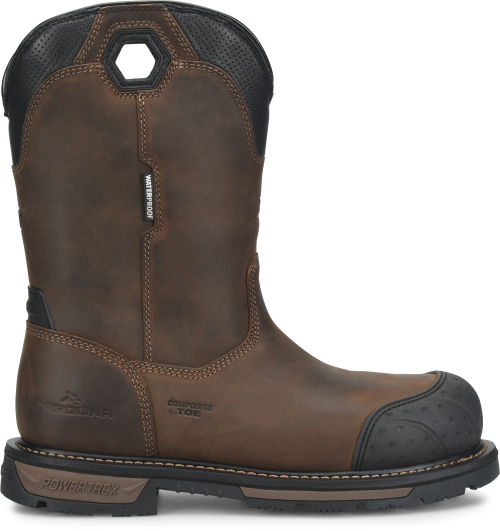
Carolina Men's Blockade Pull-On Comp Toe Work Boot - Brown - CA3702
Frequently Asked Questions
Two reasons, and the second matters more. They come on and off in seconds when you are in and out of a truck or a building all day. And there are no laces to catch on a chain, a rung, or rotating equipment, which on oilfield, farm, and equipment work is a genuine entanglement hazard rather than a convenience issue.
Snug at the heel, because there is no lacing to take up slack. Some heel movement when new is normal and settles as the footbed compresses and the leather takes your shape. What is not normal is the heel lifting clear or your toes reaching the end, both of which mean the boot is too long. Size down for length rather than up.
The Flatiron and Earthmover run flat wedge soles, which spread your weight across the whole footprint and suit concrete, shop floors, and finished surfaces. The others use conventional lugged or heeled outsoles for mud, uneven ground, and outdoor work. The sole decides comfort far more than the shaft does. See our wedge sole work boots range.
The Line Builder. A metatarsal guard covers the instep, the stretch of foot a safety toe leaves exposed, and it is specified where heavy objects can roll or drop onto the top of the foot. It is rated as part of the finished boot rather than added later. See our metatarsal boots range.
Several are, including the Well X and Laser, and the height is a real advantage since a waterproof boot only protects to its collar. A 12-inch shaft keeps you dry through considerably more standing water than a 6-inch boot. Waterproof status is stated in every product title. See our Carolina waterproof range.
Use the pull straps with both hands, keep your foot pointed, and drive the heel straight down rather than wiggling side to side, which binds the shaft against your instep. New boots are hardest before the shaft softens. If a boot needs a real fight every morning, the shaft is too narrow at the instep and a wider width usually solves it.
They are the standard choice for it. No laces to catch on tongs, chains, or rungs, a shaft tall enough to keep drilling mud out, and quick on and off when you are in and out of a truck. Confirm the electrical rating on the specific model against your site's requirement. See our oil and gas work boots range.
The wedge-soled models are, since a flat sole spreads weight rather than concentrating it under a heel. The heeled models tire you faster on flat hard ground. If your day is a plant floor rather than a lease road, choose the Flatiron or Earthmover over the lugged models.
Recently viewed
Our Top Brands