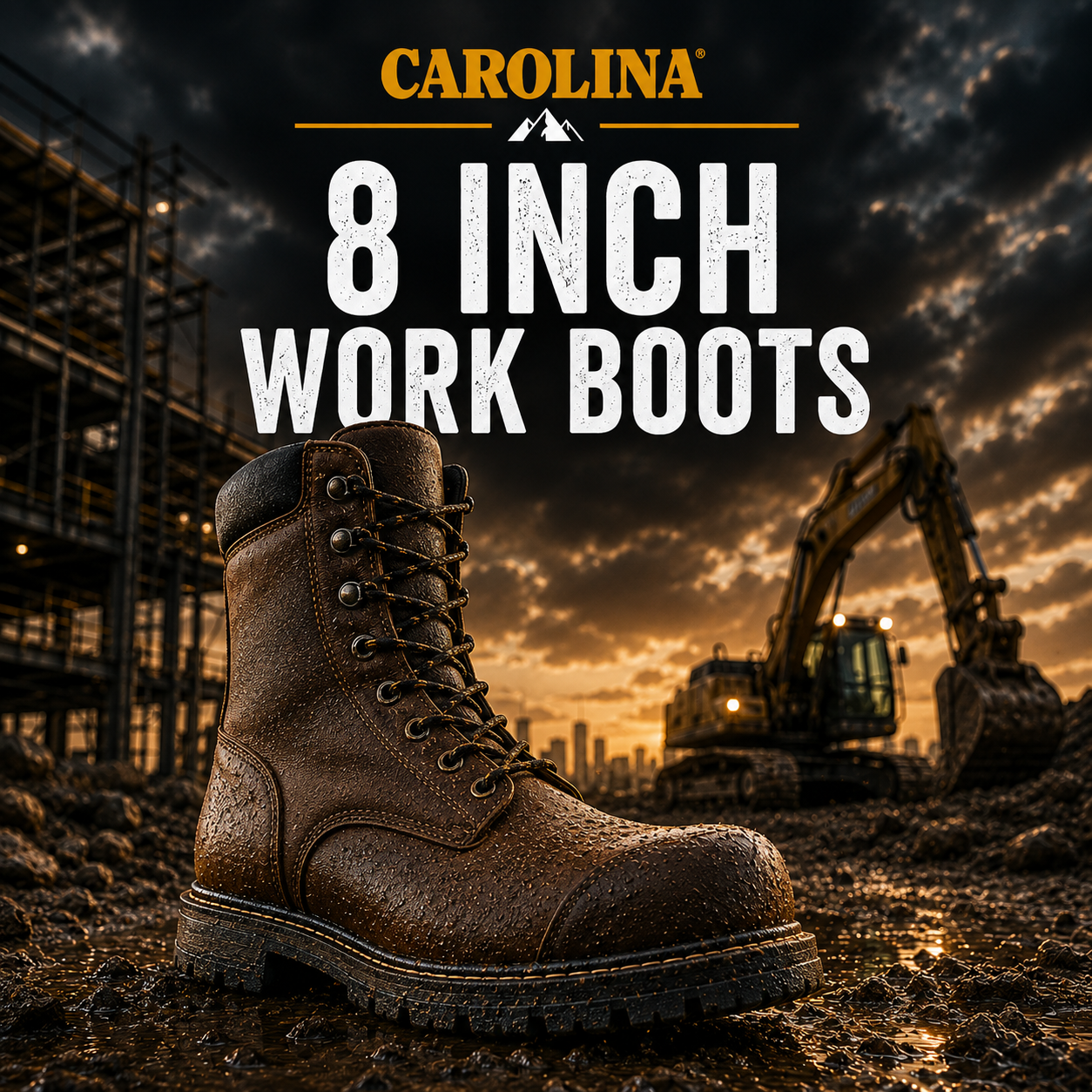
This 8" broad steel toe met guard is one tough, heavy-duty boot.
Union-made in our Pennsylvania factory, it's fortified with a Vibram® heat-resistant outsole, metatarsal guard and Kevlar® stitching. This style is proudly Made in the USA with global parts.
Key Features of the Carolina 505
-
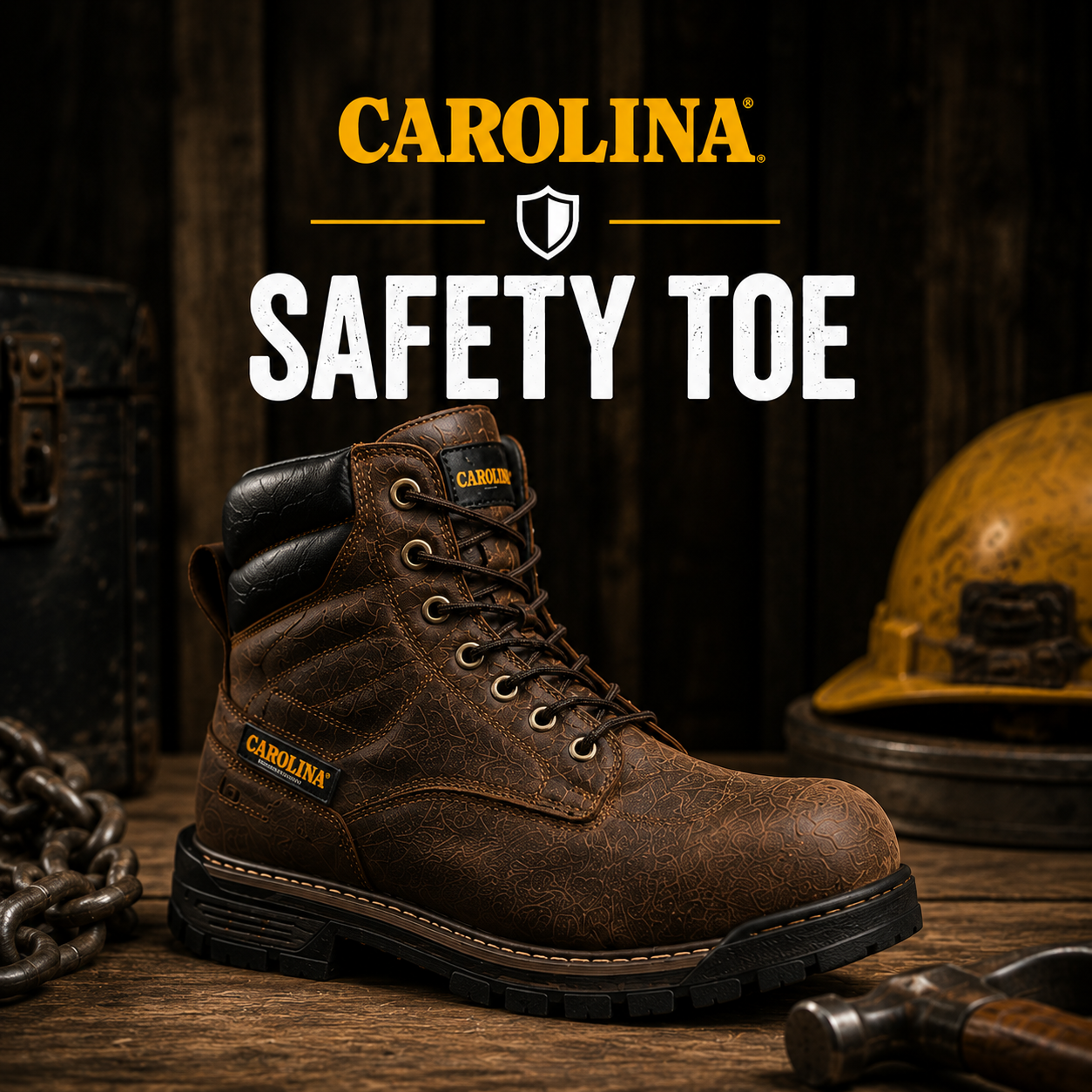
Steel Safety Toe, Broad Toe Last — Meets ASTM F2413 I-75/C-75 for impact and compression, with a generous toe box.
-
Heavy Plastic-Dense Foam-Lined External Met Guard — Metatarsal protection meeting ASTM F2413 Class Mt75.
-
Briar Pitstop Leather Upper — Rugged full-grain leather.
-
Vibram® Alpha Heat-Resisting Outsole — Oil- and heat-resisting, with heel grooves that disperse fluids and raised ladder grips.
-
Kevlar® Welt Stitching — Kevlar® thread resists flame and heat where ordinary thread burns through.
-
DRi-LEX® Lining — Soft nylon lining with strong moisture-wicking.
-
Removable DRYZ® Pillow Cushion™ Footbed & Radiantex® Insole Board — Memory-foam comfort over a supportive board.
-
Electrical Hazard Rated — Tested to withstand up to 18,000 volts at 60Hz for one minute without leakage.
-
Steel Shank & Goodyear Welt Construction — Stable and fully resoleable.
-
Union-Made in the USA with Global Parts — Built by UFCW Local 1776 in Martinsburg, PA.
Built for Heat
Most work boots fail at the thread long before the sole gives out. The 505 stitches its welt with Kevlar®, and its Vibram® outsole is rated to hold shape against surfaces up to 500°F — which is why this boot ends up on foundry floors and beside welding tables rather than on general construction sites.
Protection Where a Toe Cap Ends
A safety toe covers the toes and nothing else. The external met guard shields the metatarsal bones across the instep, meeting Mt75 — the same 75 foot-pound impact energy as an I-75 toe, applied where a rolling or dropped object actually lands.
Why Choose the 505?
Maximum foot protection — steel toe, Mt75 external met guard, and genuine heat resistance — on a resoleable, American-made 8" welt platform.
Similar Styles to Consider
Prefer a lower cut? The 508 is the 6" version of this boot, with the same external met guard. Browse the full Carolina collection at Overlook Boots.
Frequently Asked Questions
What does “heat resistant” actually mean here?
Carolina rates the Vibram® outsole to withstand contact with surfaces up to 500°F without losing its shape, and the Kevlar® welt thread resists flame and heat. It is not a firefighting boot — it's built so that brief contact with hot metal, slag, or heated floors doesn't melt the sole off the boot.
Why is the met guard on the outside?
An external guard takes the hit before anything reaches the leather, and it's easier to inspect for damage — which matters where met-rated footwear is mandated. The trade-off is bulk: it's visibly larger and can catch in tight spaces. An internal guard is lower-profile but covers less.
Do I actually need a met guard?
It depends on what's above your feet, not on what boot you like. Met guards are specified for foundries, welding, heavy manufacturing, and material handling. Your site's hazard assessment sets that requirement — and a met guard cannot be added afterward, since it's rated as part of the finished boot or not at all.
Can it be resoled?
Yes. Goodyear welt construction stitches the outsole through a leather welt, so a cobbler can replace the Vibram® sole repeatedly. On a boot built for foundry floors, where the sole is what wears, that matters more than usual.
Is it waterproof or insulated?
The 505 is an uninsulated boot whose DRi-LEX® lining wicks moisture away from the foot, which keeps it comfortable near heat. If you need a waterproof membrane or winter warmth, Carolina builds both.