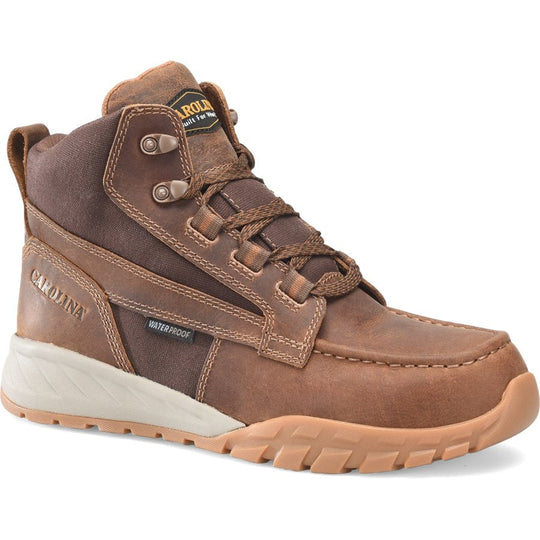
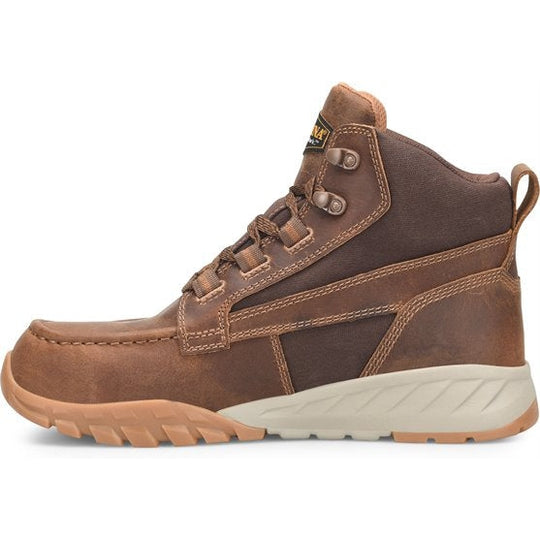
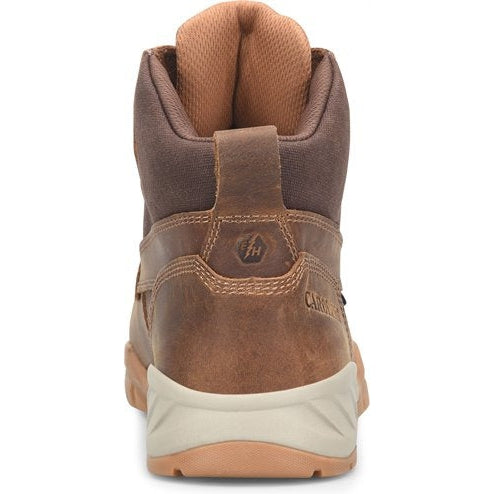
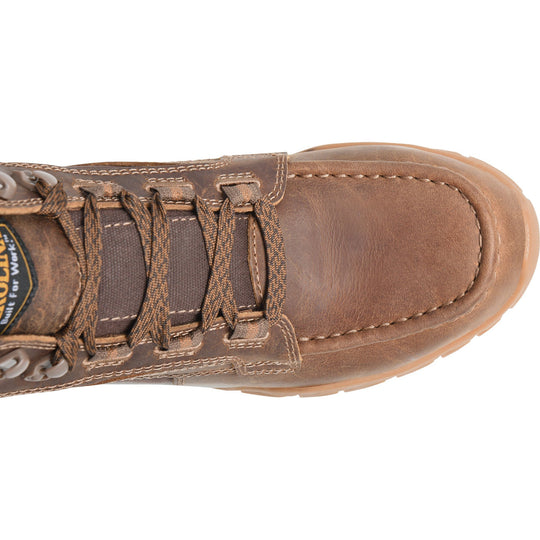
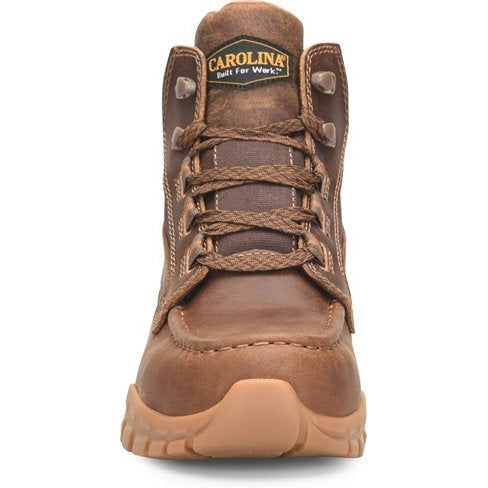
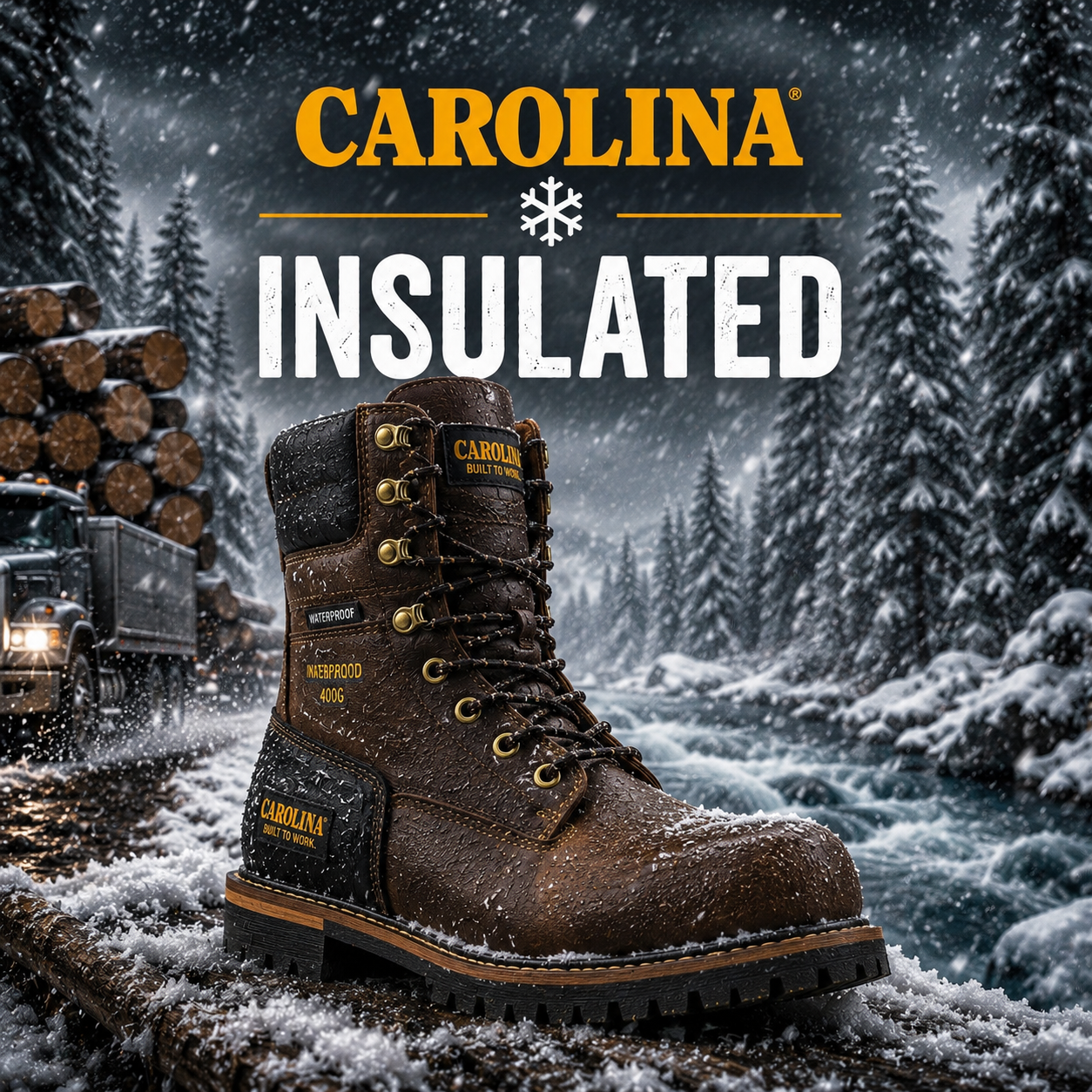
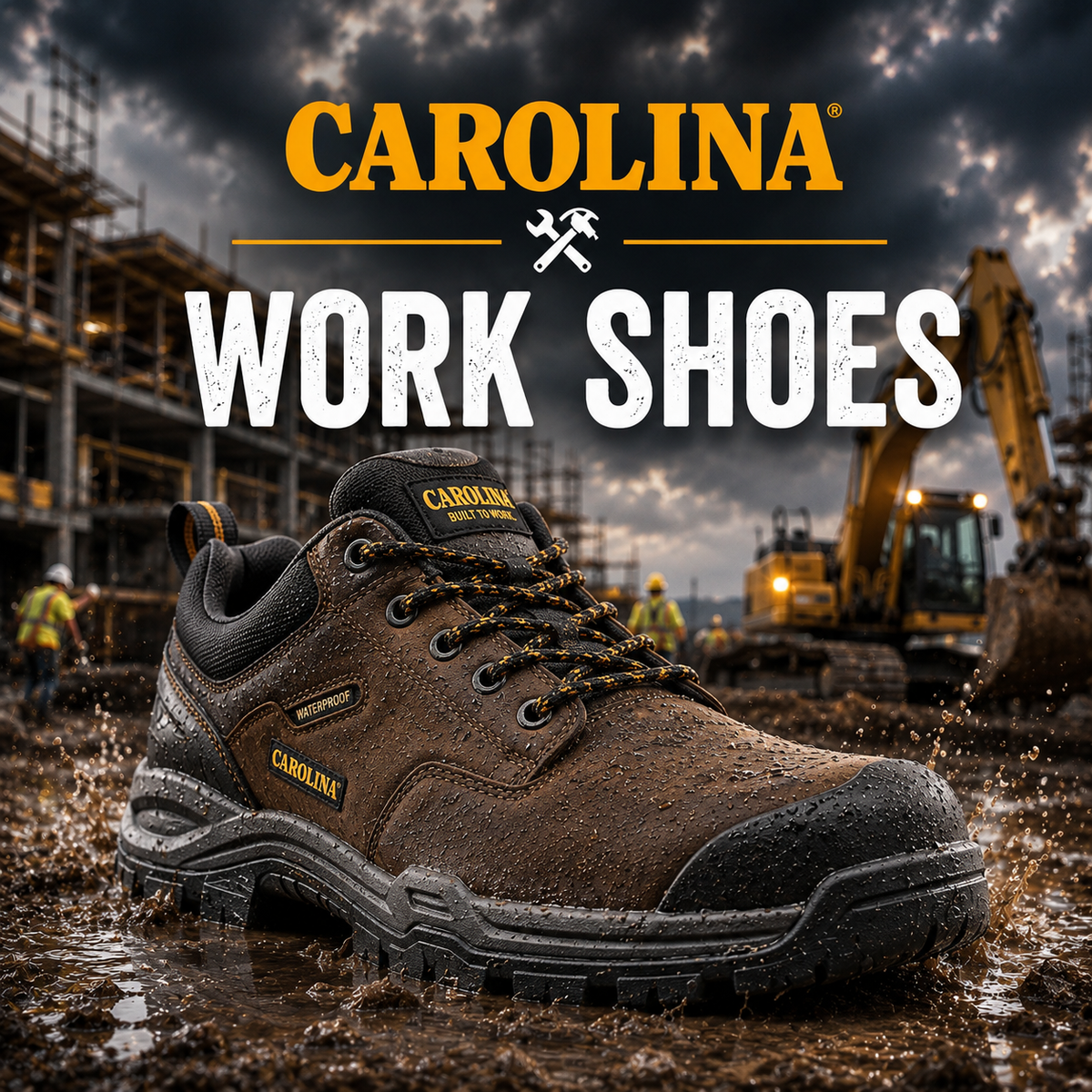
This men's moc toe 6” leather waterproof composite toe hiker makes an excellent work boot or warehouse shoe.
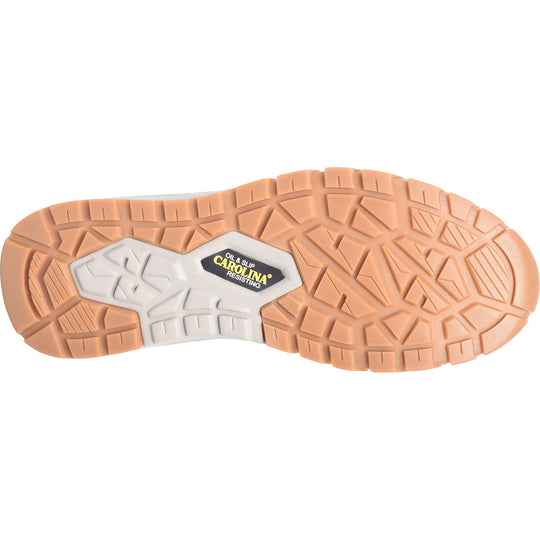
Its waterproof SCUBALINER™ lining, composite safety toe cap and oil- and slip-resisting outsole come together to deliver comfort and safety.
Key Features of the Carolina CA5593
-
Composite Safety Toe — Non-metallic toe meeting ASTM F2413 I/C, with reduced cold transfer.
-
Waterproof SCUBALINER™ — Carolina's sealed waterproof membrane keeps feet dry.
-
Neutral Wet Sand Leather Upper — Durable moc-toe leather build.
-
Triple Tuff Polyurethane Removable Footbed & EVA Midsole — Cushioned support underfoot.
-
Non-Metallic Hardware & Non-Metallic Shank — Composite throughout, down to the eyelets.
-
Electrical Hazard Rated — Up to 18,000 volts at 60Hz for one minute without leakage.
-
Cement Construction & Oil/Slip-Resisting Rubber Outsole — Lightweight, dependable traction.
Lightweight, Waterproof Protection
A composite toe protects without steel's weight, and the sealed SCUBALINER™ membrane keeps feet dry.
Nothing Metal, Eyelets Included
Composite toe, composite shank, composite hardware. Most “non-metallic” boots stop at the toe cap and leave a steel shank in the arch or metal eyelets up the front — the Challenge doesn't. There is no metal anywhere in the boot's structure.
Hiker Comfort
A Triple Tuff PU footbed over an EVA midsole cushions each step, making it comfortable for warehouse and jobsite wear.
Why Choose the CA5593?
A lightweight, waterproof, fully non-metallic composite-toe moc-toe hiker for warehouse and general work.
Similar Styles to Consider
Prefer a nubuck-and-suede hiker? See the Force CA5590, also fully non-metallic. Browse the full Carolina collection at Overlook Boots.
Frequently Asked Questions
Is there any metal in the boot?
The composite toe, the shank, and the lace hardware are all non-metallic — there is no metal in the boot's structure.
Is it waterproof?
Yes. Carolina's SCUBALINER™ is a sealed membrane behind the upper rather than a surface coating that wears off.
What is a moc toe, and does it fit differently?
A moccasin-style toe: the upper is stitched in a U-shape across the front rather than seamed at the tip. It gives a rounder, roomier toe box than a standard last, which is much of why moc toes are known for comfort.
How does cement construction affect the boot?
The outsole is bonded directly to the upper rather than stitched through a welt, which keeps the boot light and lets it flex from the first day, with no break-in underfoot.