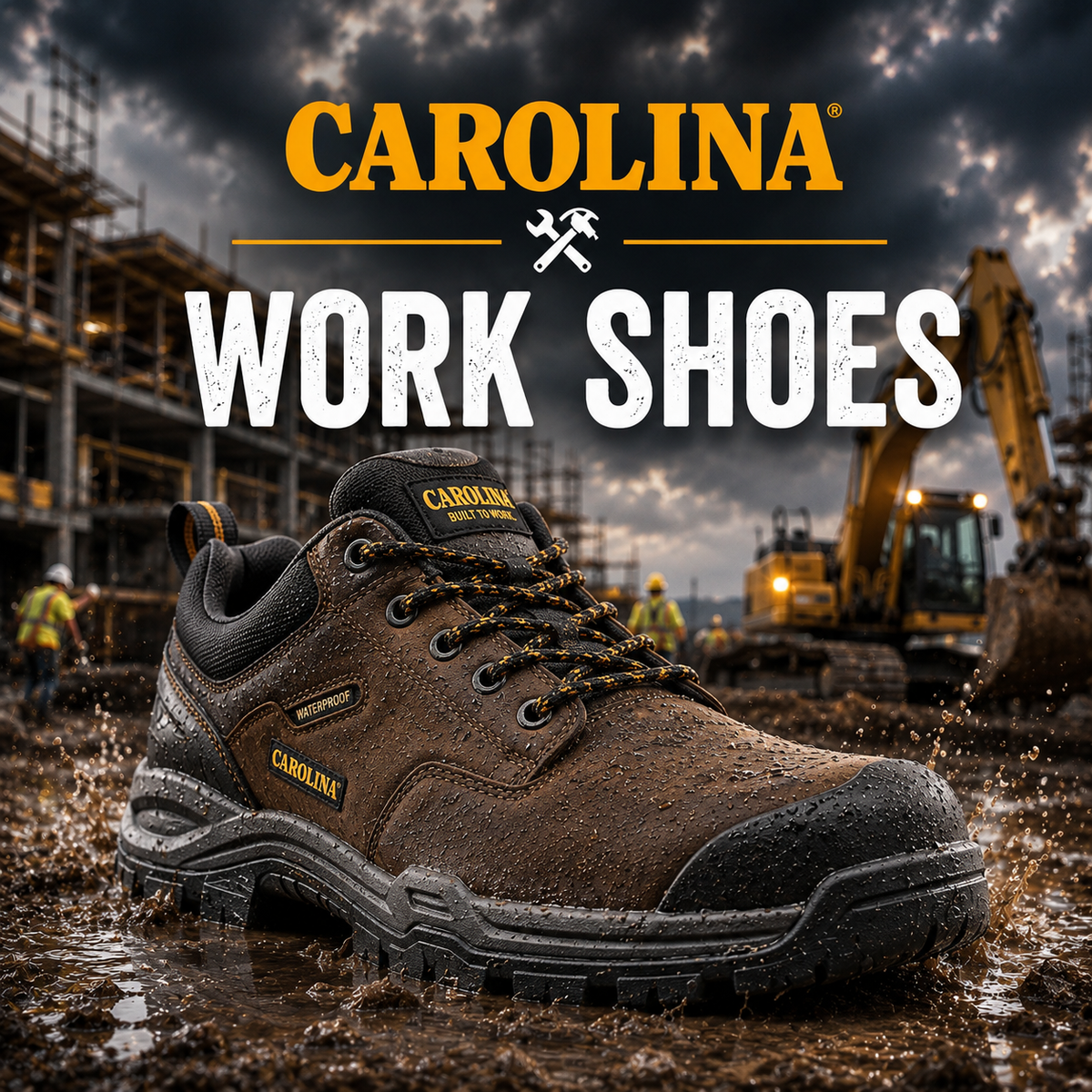
Count on these men's 5” waterproof composite toe toe hikers for terrain-gripping traction on the jobsite or out on the trail.
Fortified with a carbon composite safety toe cap and our waterproof SCUBALINER™, they feature our removable AG8™ footbed for comfort and an oil- and slip-resisting rubber outsole.
Key Features of the Carolina CA5548
-
Carbon Composite Safety Toe — Lightweight non-metallic toe meeting ASTM F2413 I/C, with reduced cold transfer.
-
Waterproof SCUBALINER™ — Carolina's sealed waterproof membrane keeps feet dry.
-
Cowboy Teak Leather & Mesh Upper — Lightweight, breathable hiker build.
-
Molded Rubber Abrasion Toe — Extra abrasion protection up front.
-
Removable AG8™ Polyurethane Dual-Density Footbed & Pillow Cushion™ Insole — Cushioned comfort underfoot.
-
Non-Metallic Shank — Composite support with no steel in it.
-
Electrical Hazard Rated — Up to 18,000 volts at 60Hz for one minute without leakage.
-
Cement Construction & Oil/Slip-Resisting Rubber Outsole — Lightweight, terrain-gripping traction.
Lightweight, Waterproof Protection
The low 5" profile and carbon composite toe keep the shoe light and agile, while the sealed SCUBALINER™ membrane keeps feet dry and a molded rubber abrasion toe adds durability.
All-Terrain Comfort
An AG8™ dual-density footbed cushions each step, and the oil- and slip-resisting outsole grips varied terrain.
Why Choose the CA5548?
A lightweight, low-profile, waterproof carbon composite-toe hiker for the jobsite or trail.
Similar Styles to Consider
Prefer a 6" boot? See the Duke CA5540. Want an 8"? The Duke Carbon CA5543. Browse the full Carolina collection at Overlook Boots.
Shop more: Carolina Boots, Composite Toe Work Boots, Waterproof Work Boots, Hiking Work Boots
Frequently Asked Questions
What safety toe does the Duke 5" have?
A carbon composite safety toe, non-metallic and meeting ASTM F2413 I/C for impact and compression, with reduced cold transfer into the toe box.
What does the molded rubber abrasion toe do?
It's a rubber cap bonded over the toe leather — the most scuff-prone part of any work shoe — so kneeling and toe-dragging wear hits sacrificial rubber instead of the upper, extending the shoe's life.
How does cement construction affect the shoe?
The outsole is bonded directly to the upper rather than stitched through a welt, which keeps the shoe light and flexible from the first day, with no break-in underfoot.
Is a 5" work shoe protective enough for a jobsite?
It carries the same ASTM F2413 I/C toe protection and EH rating as taller boots — the difference is coverage, not protection level. Choose the 5" cut when you want hiker agility and your site doesn't require ankle-height footwear.
What widths does the Duke 5" come in?
It comes in Medium and Wide, in men's sizes 8 through 14.
Is the Duke 5" electrical hazard rated?
Yes. It's electrical hazard rated, tested to withstand up to 18,000 volts at 60Hz for one minute without leakage.