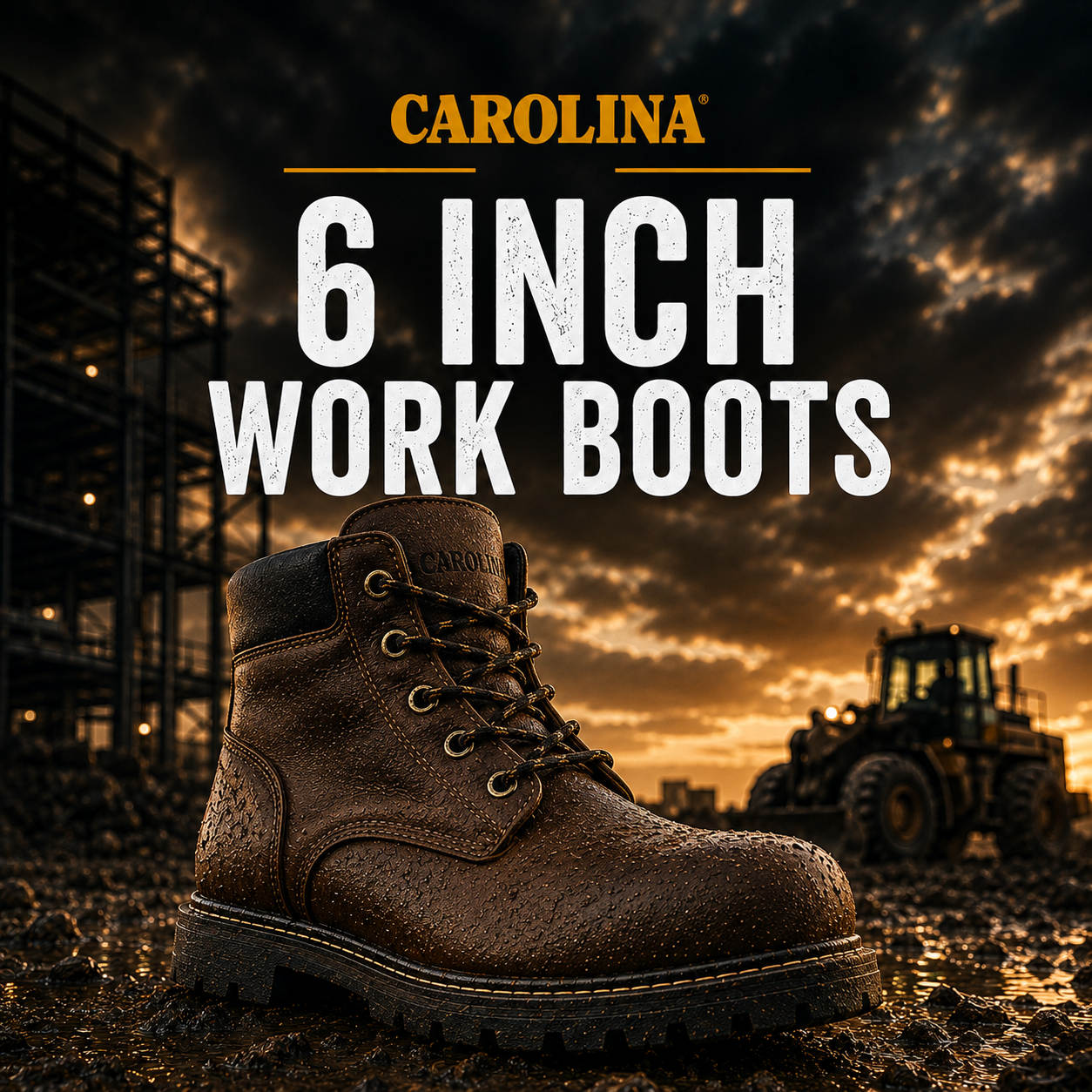
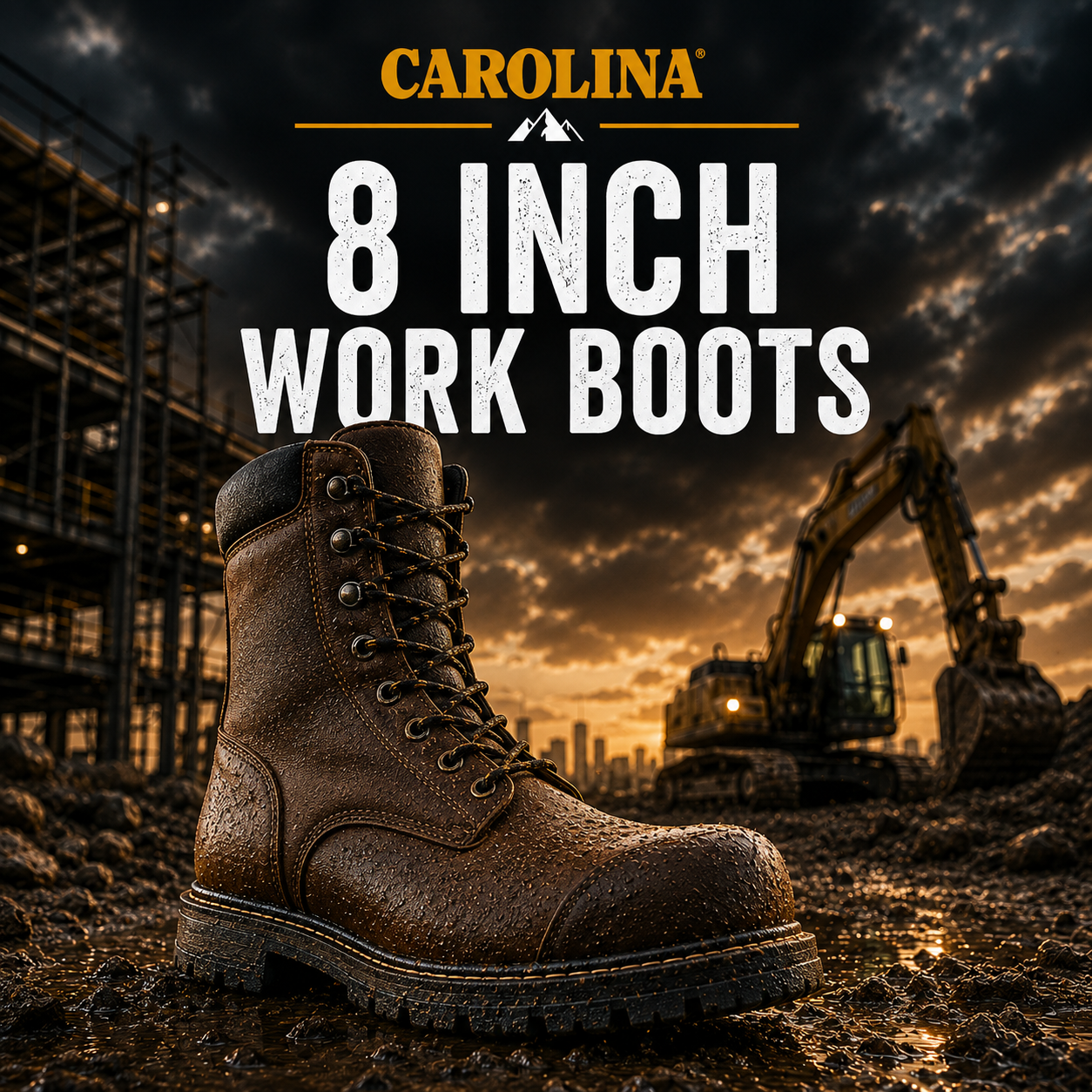
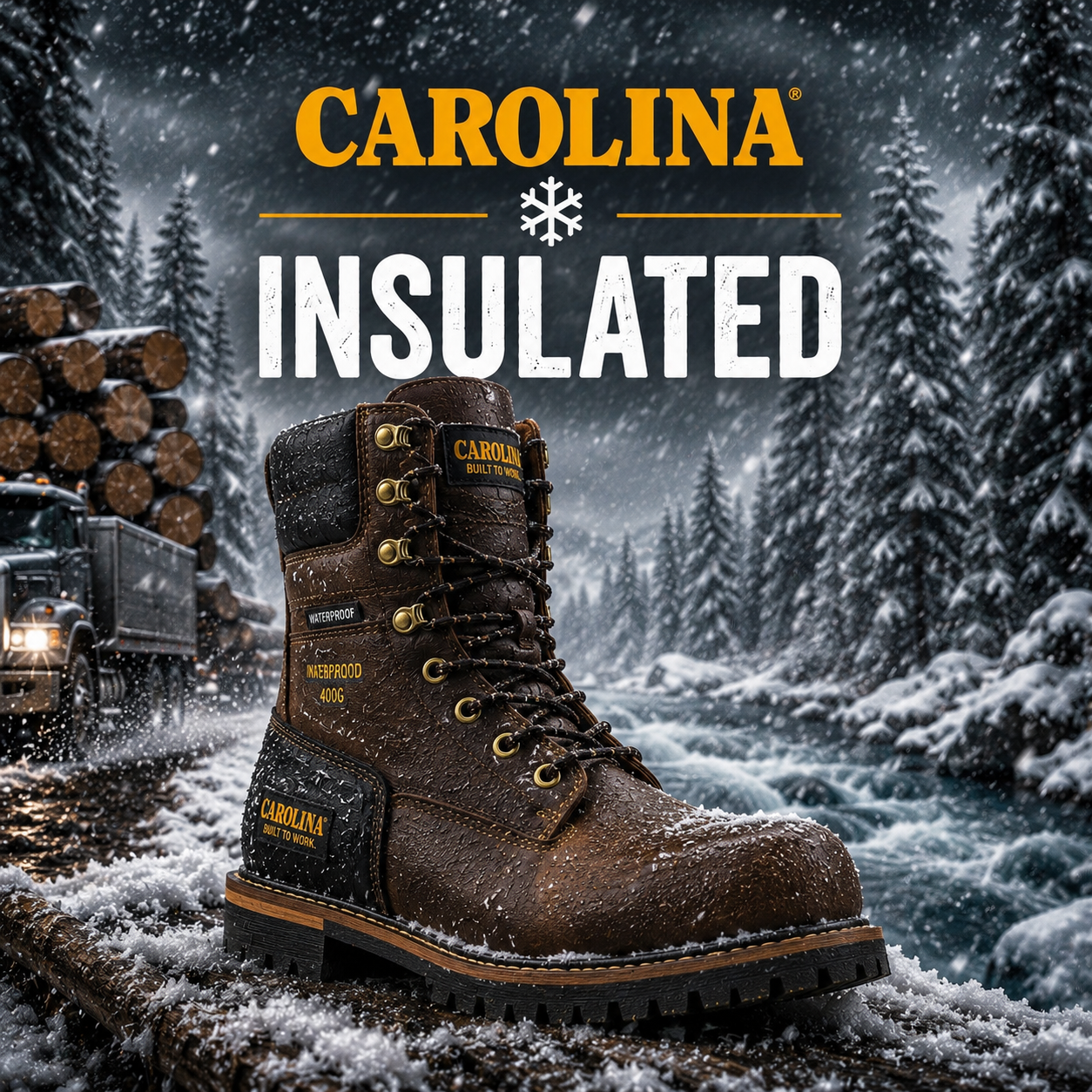
Lightweight, flexible, and warm without the bulk—step into our Freezer, Men's 8" Composite Toe Insulated Work Boot built for -20°F conditions.
This boot features ultra-thin insulation and Sc_Foam™ by Solarcore®, powered by NASA-grade Aerogel for serious heat retention. The composite toe meets ASTM standards, and the flexible 8” design keeps you moving in the coldest conditions.
Key Features of the Carolina CA4590
-
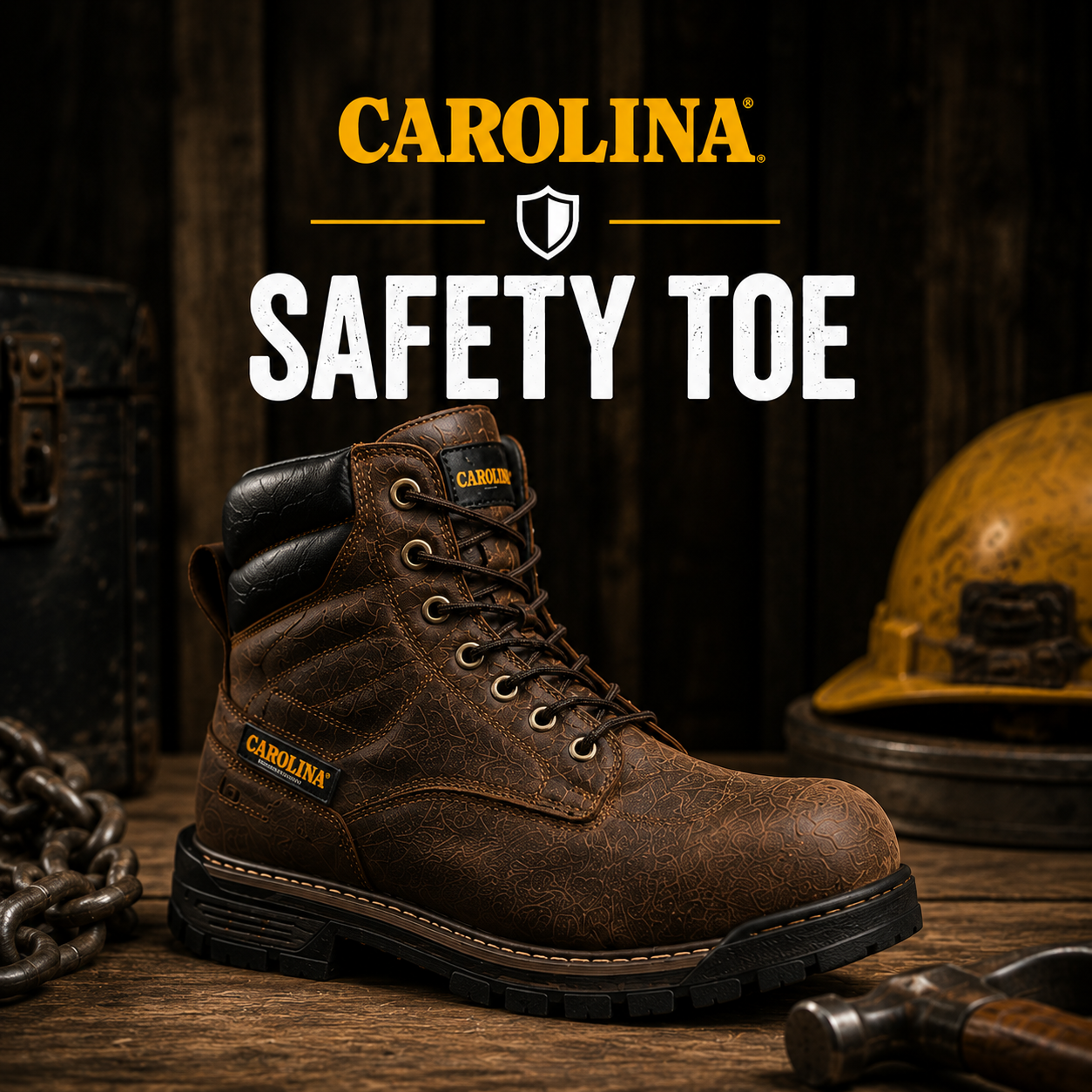
Composite Safety Toe — A non-metallic toe meeting ASTM F2413 for impact (I/75) and compression (C/75), with reduced cold transfer.
-
Solarcore® SC_Foam™ Aerogel Insulation — Rated to −20°F. Ultra-thin, derived from aerospace insulation technology.
-
Dark Brown Barnyard Acid Resistant Leather Upper — Treated against the caustic chemicals found in heavy industry and on farms and ranches.
-
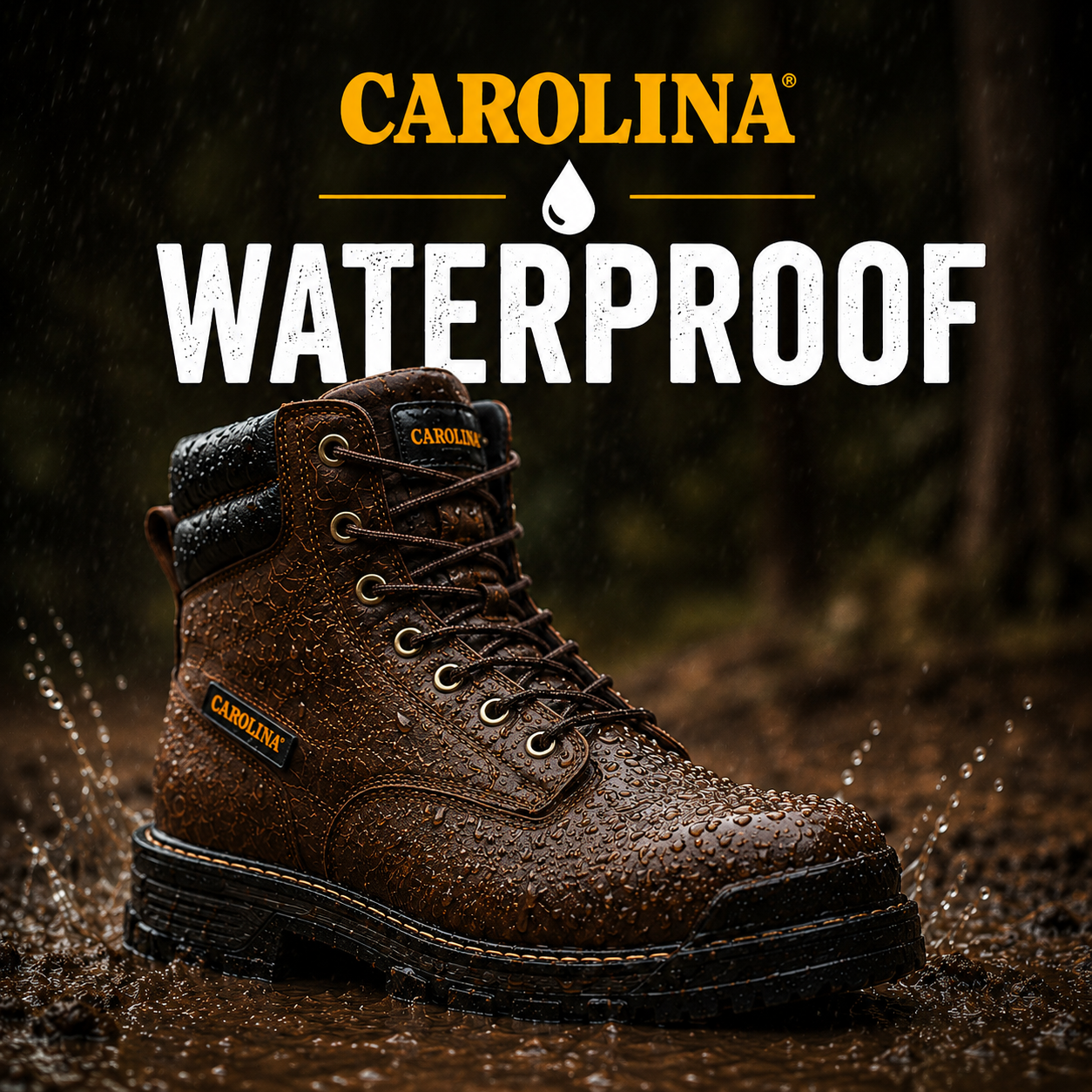
Waterproof SCUBALINER™ — Carolina's sealed proprietary waterproof lining system.
-
Molded Rubber Abrasion Toe — A bumper over the leather where boots wear out first.
-
Molded External Heel Counter — Stiffens the heel against roll on uneven ground.
-
DRI-LEX® Moisture-Wicking Anti-Microbial Mesh Lining — Moves sweat off the foot and resists odor.
-
Removable AG8™ Dual-Density Footbed — An update to the AG7, with enhanced arch support.
-
Non-Metallic Shank — Composite support with no steel in it.
-
Electrical Hazard Rated — Tested to withstand up to 18,000 volts at 60Hz for one minute without leakage.
-
Cement Construction & EVA Midsole — A bonded sole that keeps the boot light and flexible.
-
Aerogrip Oil- & Slip-Resisting Rubber Outsole — Traction on cold, slick surfaces.
Aerogel Is Not Gram-Weight Insulation
Most insulated boots are rated in grams — 200g, 400g, 600g — which measures how much Thinsulate™ or similar batting is packed into the boot. More grams means more warmth and more bulk, and eventually a boot that fits like a brick.
Aerogel works differently. It's among the least thermally conductive solid materials made, and Solarcore's SC_Foam™ delivers a −20°F rating in a layer thin enough that the boot still flexes and still fits like a boot. If you've avoided insulated footwear because of the bulk, this is the one to look at.
Warmth Without the Sweat
An insulated boot fails when your foot sweats and the moisture carries heat away. The DRI-LEX® lining wicks that sweat outward and resists the microbes behind boot odor, while the sealed SCUBALINER™ keeps external water out. Warmth and dryness are the same problem.
Why the Composite Toe Matters in Cold
Steel conducts heat away from your toes, so a steel-toe insulated boot goes cold at the cap first no matter what sits behind it. A composite cap doesn't — exactly what you want in a boot rated to −20°F.
Why Choose the CA4590?
Serious cold-weather protection without the bulk, on acid-resistant leather, with a composite toe that won't chill your toes.
Similar Styles to Consider
Prefer conventional gram-weight insulation? The Dormite CA8556 carries 600g of Thinsulate™. Don't need insulation at all? The Barrett CA5601 is uninsulated on the same acid-resistant leather. Browse all composite toe boots at Overlook Boots.
Shop more: Carolina Boots, Carolina Insulated Boots, Composite Toe Work Boots, Carolina 8 Inch Work Boots
Frequently Asked Questions
What does the −20°F rating mean in practice?
It's the temperature the insulation system is rated to. Real-world warmth also depends on your own activity, your socks, and how long you stand still — a rating assumes you're generating some heat. Treat it as a guide, not a guarantee.
How does aerogel compare to 600g Thinsulate™?
They're rated differently, so there's no clean conversion. What aerogel buys you is warmth per millimeter: a −20°F rating in a layer thin enough that the boot doesn't feel packed. A 600g boot is warm too, and bulkier.
What does barnyard acid resistant mean?
The leather is treated to resist degradation from manure, urine, fertilizer, and similar caustic chemicals. It is not the same as chemical-resistant footwear for industrial solvents.
How does cement construction affect the boot?
The outsole is bonded directly to the upper rather than stitched through a welt, which keeps an insulated boot light and lets it flex from the first day, with no break-in underfoot.
What safety standards does the Freezer CA4590 meet?
The composite toe meets ASTM F2413 for impact (I/75) and compression (C/75), the boot is EH rated (tested to 18,000 volts at 60Hz for one minute), and the Aerogrip rubber outsole is oil- and slip-resisting.
How does the Freezer fit?
It runs true to size — order the size you wear in athletic shoes, and choose Wide if you normally need an EE width. The thin aerogel insulation keeps the fit close to an uninsulated boot rather than a bulky winter boot, and the AG8 footbed is removable.