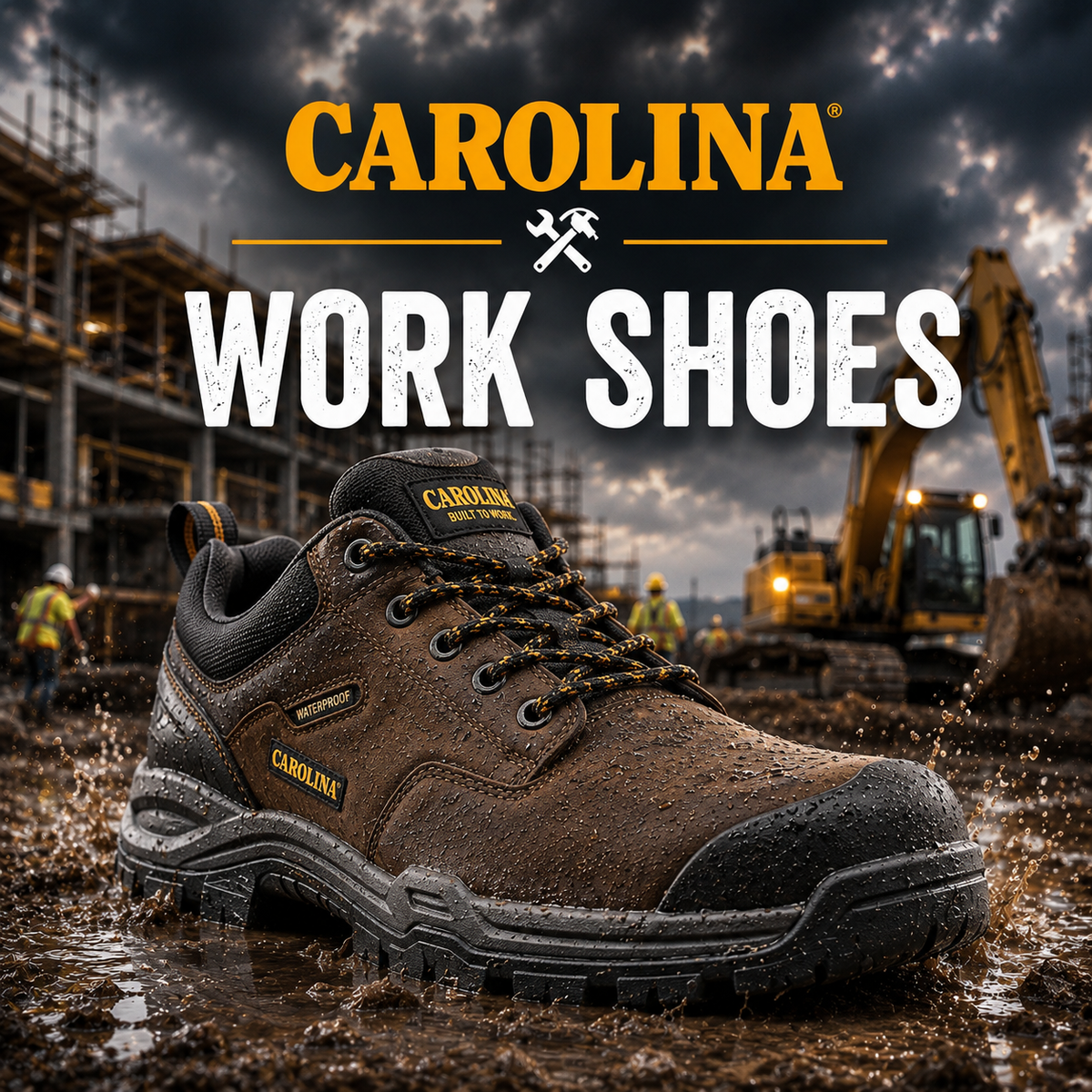
Our men's 6" composite broad toe internal metguard, built with safety and durability in mind.
The composite safety toe cap and internal metatarsal guard team up for superior protection, and our Pillow Cushion™ insole and removable AG7™ footbed help to keep hardworking feet comfortable.
Key Features of the Carolina CA5582
-
Composite Safety Toe Cap — A non-metallic broad toe meeting ASTM F2413 for impact (I/75) and compression (C/75), with reduced cold transfer.
-
Polyurethane Internal MetGuard — Meets ASTM F2413 Class Mt75. Built inside the boot, so it flexes with the foot rather than sitting on top of the laces.
-
Copper Crazy Horse Leather Upper — Rugged, rich full-grain leather.
-
Abrasion-Resisting Coated Leather Toe — Extra protection where boots scuff first.
-
Mesh Lining — Breathable against the foot.
-
Removable AG7™ Polyurethane Footbed & Pillow Cushion™ Insole — Enhanced arch support over a memory-foam layer.
-
EVA Midsole — Lightweight cushioning underfoot.
-
Non-Metallic Shank — Composite support with no steel in it.
-
Electrical Hazard Rated — Tested to withstand up to 18,000 volts at 60Hz for one minute without leakage.
-
Cement Construction & Slip-Resisting Rubber Outsole — A bonded sole that keeps the boot light and flexible.
What a Metatarsal Guard Actually Protects
A safety toe covers the toes and nothing else. The metatarsals — the long bones running from your toes back toward the ankle — sit exposed under thin leather on an ordinary boot. A dropped die, a rolled pipe, or a load slipping off a forklift lands there. An Mt75 guard is rated to absorb a 75-pound-force impact across that whole area.
Internal Versus External
An internal guard is built between the layers of the upper. It flexes as the boot flexes and adds nothing to the outside profile, which makes it far more comfortable to walk in than an external guard bonded over the lacing. Carolina builds external met guards on other styles for jobs where the guard takes direct, repeated hits and you want it replaceable and visible.
Choose Met Protection From the Start
A met guard is engineered into the boot's construction. If your work involves overhead loads, heavy material handling, foundry or forge floors, or anything that can drop on the top of your foot, buy the met-rated boot on day one.
Why Choose the CA5582?
Toe and metatarsal protection with an EH rating, in a light, flexible boot you can wear for a full shift.
Similar Styles to Consider
Want the Bruno platform without a met guard? The CA5521 is the insulated waterproof composite toe, and the CA5522 is the SD-rated carbon toe. Browse all composite toe boots at Overlook Boots.
Shop more: Carolina Boots, Met Guard Boots, Composite Toe Work Boots, Carolina 6 Inch Work Boots
Frequently Asked Questions
What does the Mt75 rating mean?
It is the ASTM F2413 metatarsal impact classification. The guard is tested to withstand a 75-pound-force impact across the top of the foot — the same energy threshold used for the I/75 toe rating, applied to a different part of the boot.
Is the metatarsal guard metal?
The guard is polyurethane — Carolina specifies a polyurethane internal guard on this style, and the toe cap and shank are both non-metallic as well. Carolina does not publish the lace hardware material, so if you need a fully metal-free boot, confirm before ordering rather than assuming.
Is an internal met guard as protective as an external one?
Both meet the same Mt75 threshold. The internal guard is more comfortable and less prone to snagging; an external guard is easier to inspect and takes direct abuse better. Choose on the work, not the rating.
Can I add a met guard to a boot I already own?
The guard is built into the boot's structure and rated as part of the finished product, so it can't be added later. Choose a met-rated model from the start.
How does cement construction affect the boot?
The outsole is bonded directly to the upper rather than stitched through a welt, which keeps a met-guard boot lighter and lets it flex from the first day, with no break-in underfoot.
How does the Bruno CA5582 fit?
It runs true to size — order the size you wear in athletic shoes, and choose Wide if you normally need an EE width. The broad composite toe leaves extra room across the forefoot, and the AG7 footbed is removable.