Save 10%
Sale price$247.46
Regular price$274.95
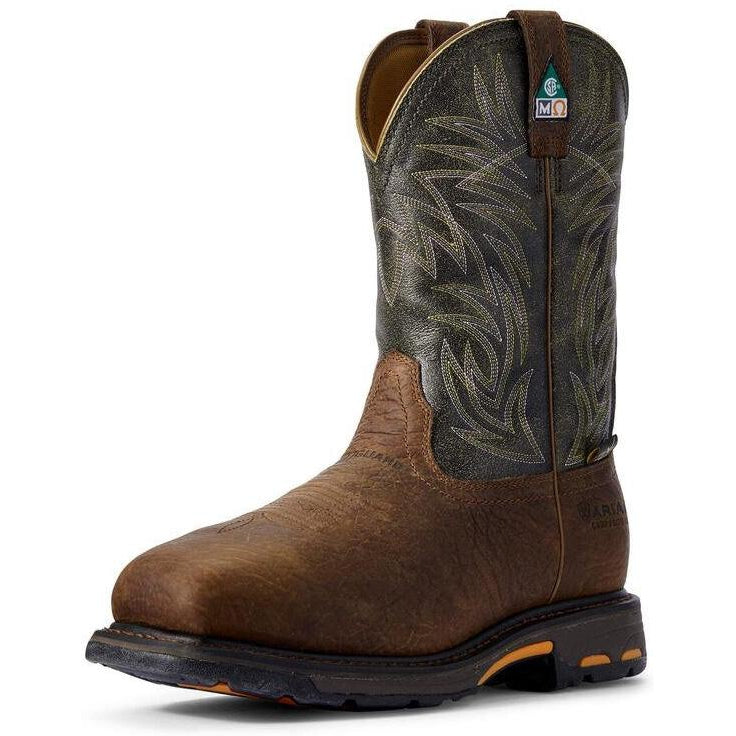
Ariat Men's WorkHog CSA 11" Wide Square Composite Toe MetGuard Work Boot - Ridge Brown - 10017174
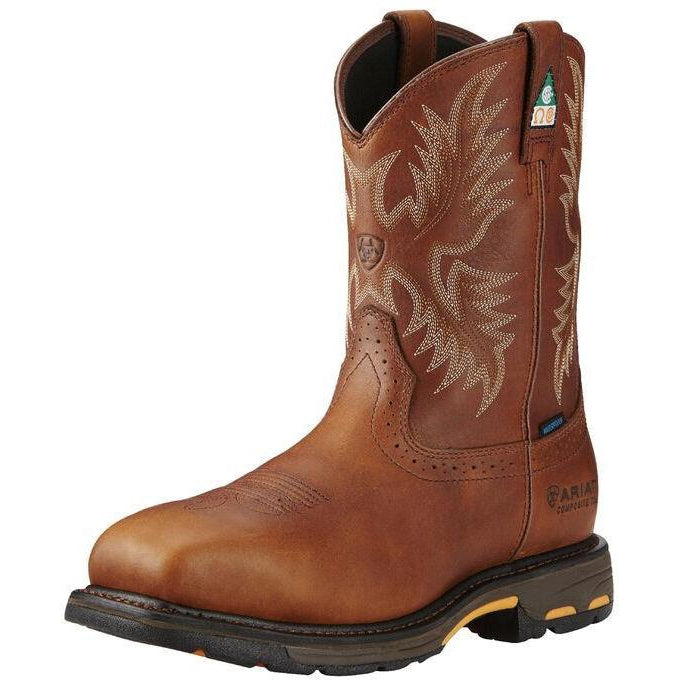
Sale price$264.95
Ariat Men's WorkHog CSA 11" Wide Sqr Comp Toe WP Work Boot - 10017175
Frequently Asked Questions
CSA approved boots are certified to CSA Z195, the Canadian standard for protective footwear. The standard covers several separate protections: toe impact and compression, puncture-resistant soles, metatarsal guards, and electric shock resistance. A boot carries only the ones it's marked for, so a CSA boot isn't automatically electrically rated or puncture-rated. Read the symbols on the boot and match them to the hazards on your site.
Each CSA symbol marks one specific protection. A green triangle is a Grade 1 toe with a puncture-resistant sole. A yellow triangle is the same puncture-resistant build at the lighter Grade 2 toe rating. A blue rectangle is a Grade 1 toe with no puncture sole. A white rectangle with an orange omega is electric shock resistance. A yellow rectangle marked SD is static dissipative, for work around sensitive electronics. The electrical marks aren't interchangeable, so check for the exact one your work calls for.
You need whatever your site's hazard assessment specifies, and for most construction and heavy industrial work, that's the green triangle. It covers the two most common jobsite hazards in one mark: dropped objects and sharp debris underfoot. Lighter ratings, like the yellow triangle, are certified for lower-hazard work, so they don't substitute for where a green triangle is required. Your employer or safety officer sets the rating, so confirm it before you buy.
No, CSA approved boots are not the same as ASTM-rated boots. CSA Z195 is the Canadian standard, and ASTM F2413 is the American one, marked two different ways: CSA by symbols like the green triangle, ASTM by a text code such as ASTM F2413-11. A boot can be tested to both, but an ASTM rating doesn't stand in for a required CSA mark, and a CSA mark doesn't automatically satisfy every US employer. The boots here carry both ratings, which helps if you work either side of the border. The employer and the site still decide what's accepted.
No, we currently only ship within the continental United States. The CSA marking still matters here for US-based workers whose employer or worksite requires CSA-certified footwear, including anyone who takes jobs in Canada. Confirm the site's requirement before you order.
To determine CSA approved boots, look for the CSA symbols on the boot itself, the tongue label, a tag, or inside the shaft. A listing that only says "safety toe" or "meets CSA" with no symbol on the boot isn't a verified certification. Genuine products list the exact standard, such as CSA Z195-14, on the boot and the product page. If site access depends on it, check the markings on the actual pair before you wear them in.
The difference is the cap material: composite toes use non-metal materials like carbon fiber or Kevlar, and steel toes use a steel cap. Both can hold a CSA Grade 1 rating, so a certified composite toe meets the same impact and compression standards as steel. Composite is lighter, doesn't conduct heat or cold, and won’t set off a metal detector.
You need a metatarsal guard on your CSA safety boot when your work puts the top of your foot in the path of falling, rolling, or compressing objects, the area a toe cap doesn't cover. Met guards protect the long bones across the top of the foot, which is why they're standard in foundry work, heavy manufacturing, demolition, and material handling. A standard toe cap protects only the toes from impact. If your hazard assessment flags forefoot impact, that's when the met guard matters. On this page, the Ariat WorkHog 10017174 carries an internal XRD metatarsal guard.
You should replace CSA work boots based on condition, not a set schedule. Swap them out when the outsole tread wears smooth and loses grip, when the leather cracks through, or when the puncture plate underfoot starts to feel soft. A hard impact or a sole penetration can compromise the protection without any visible damage, so a boot that's taken a real hit should be replaced even if it still looks fine. Follow the manufacturer's care and replacement guidance where provided.
Yes, composite toe CSA rated boots are meant for all-day comfortable wear, and most of that comfort comes from fit, the footbed, and break-in, not the toe cap. Size for a snug heel with room at the toes for work socks. A safety toe cap doesn't stretch, so correct length and width matter more than on a soft-toe boot, or the cap rubs. Cushioning, moisture control, and underfoot support move the needle more than the cap material. A leather boot like the ones here softens with a short break-in, but a new safety boot shouldn't need a painful one to fit right. If it does, the size or last is wrong.
Recently viewed
Our Top Brands