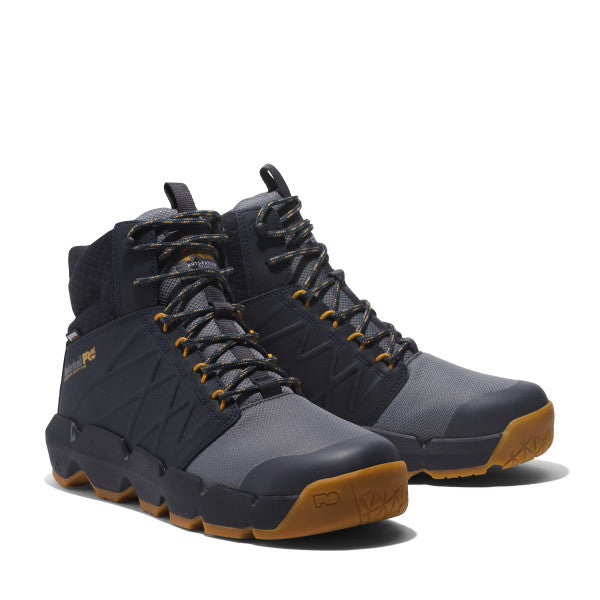
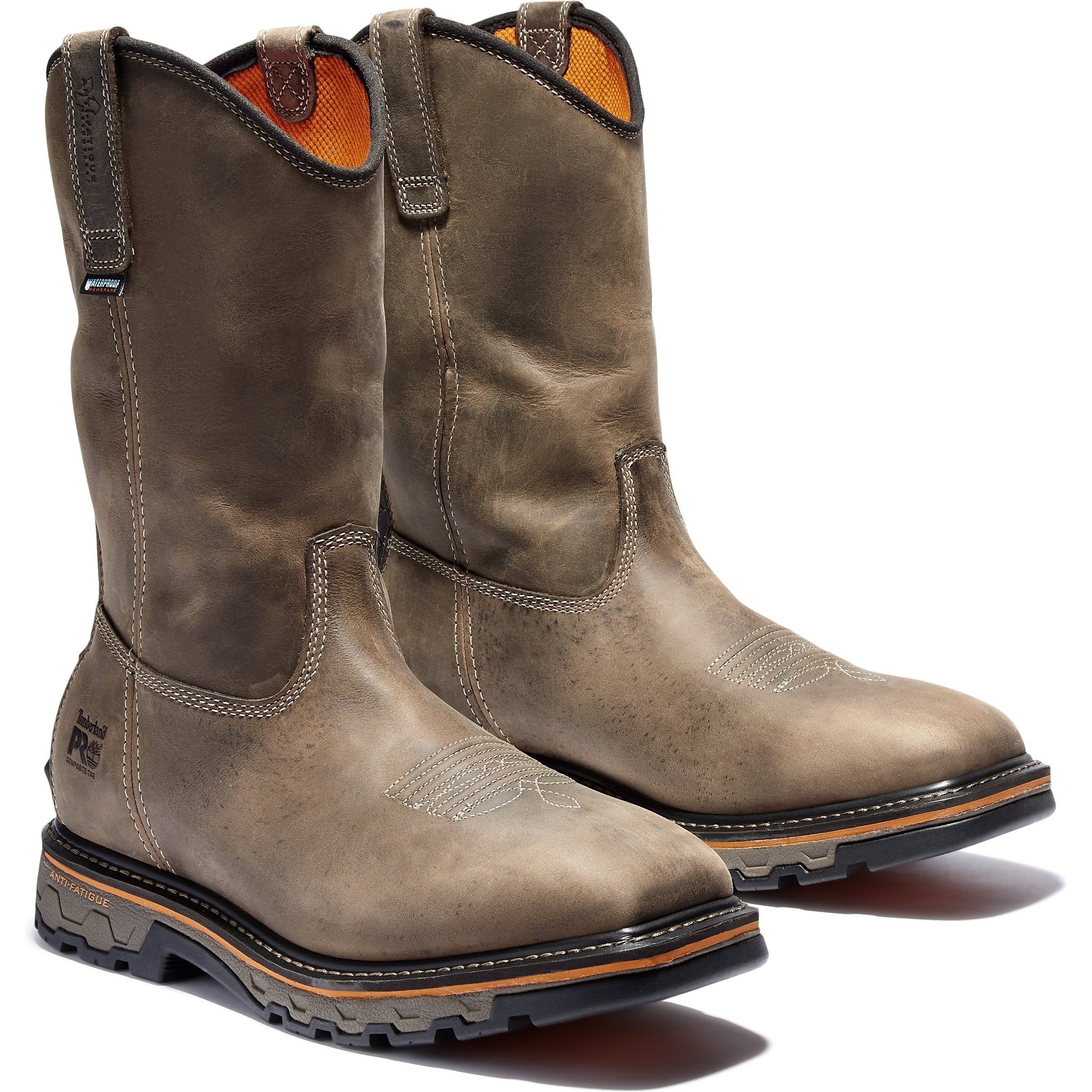
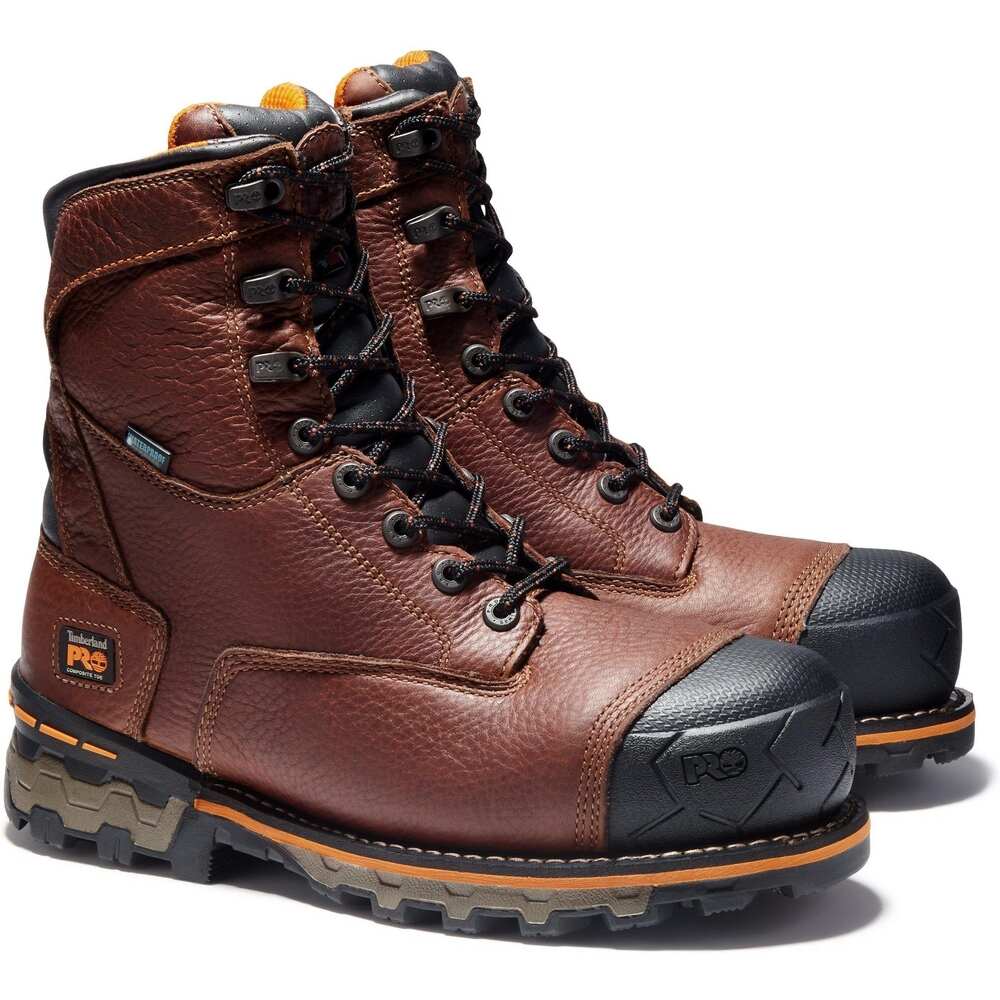
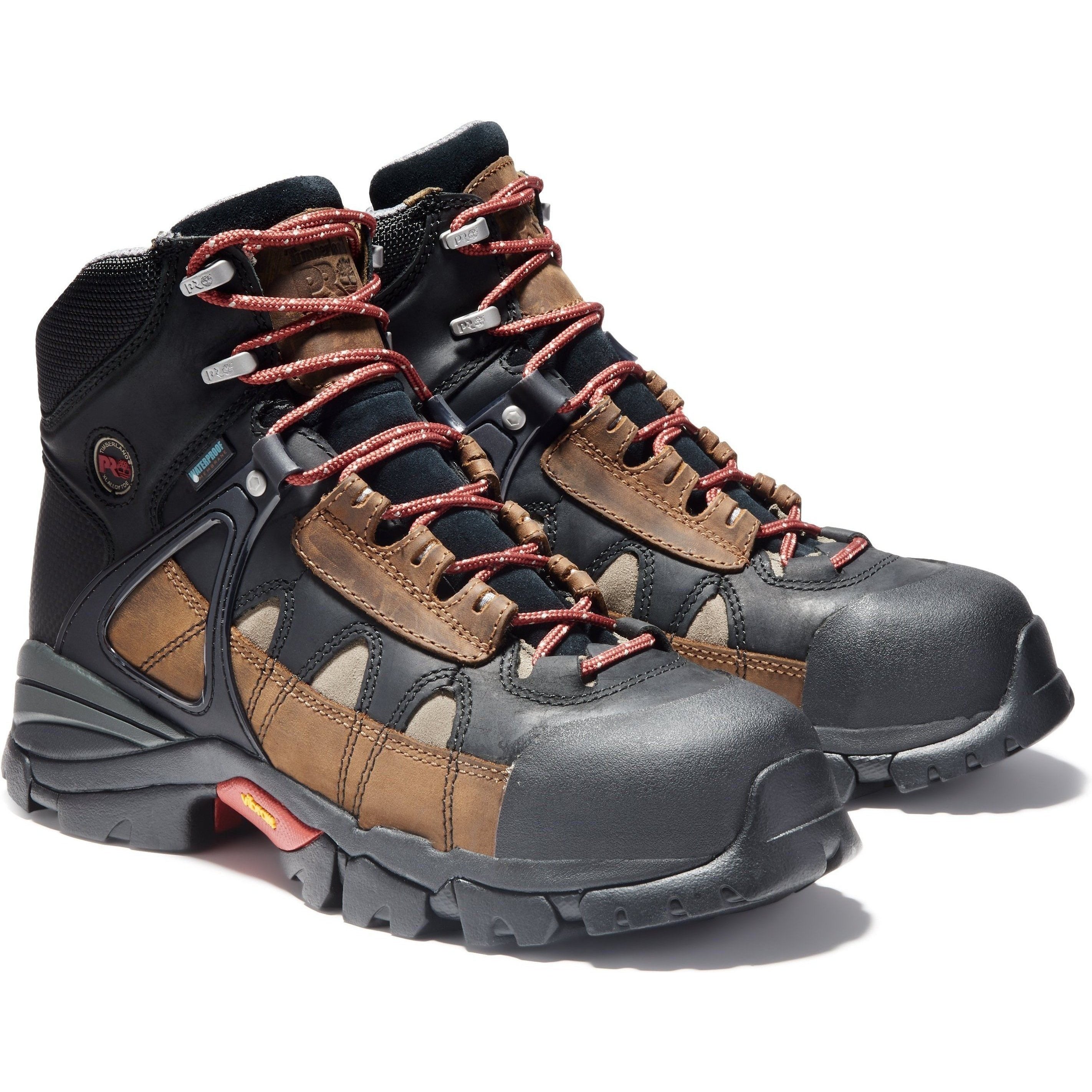
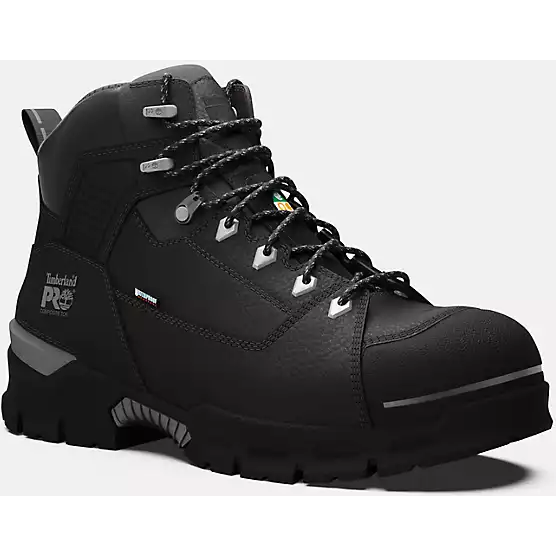
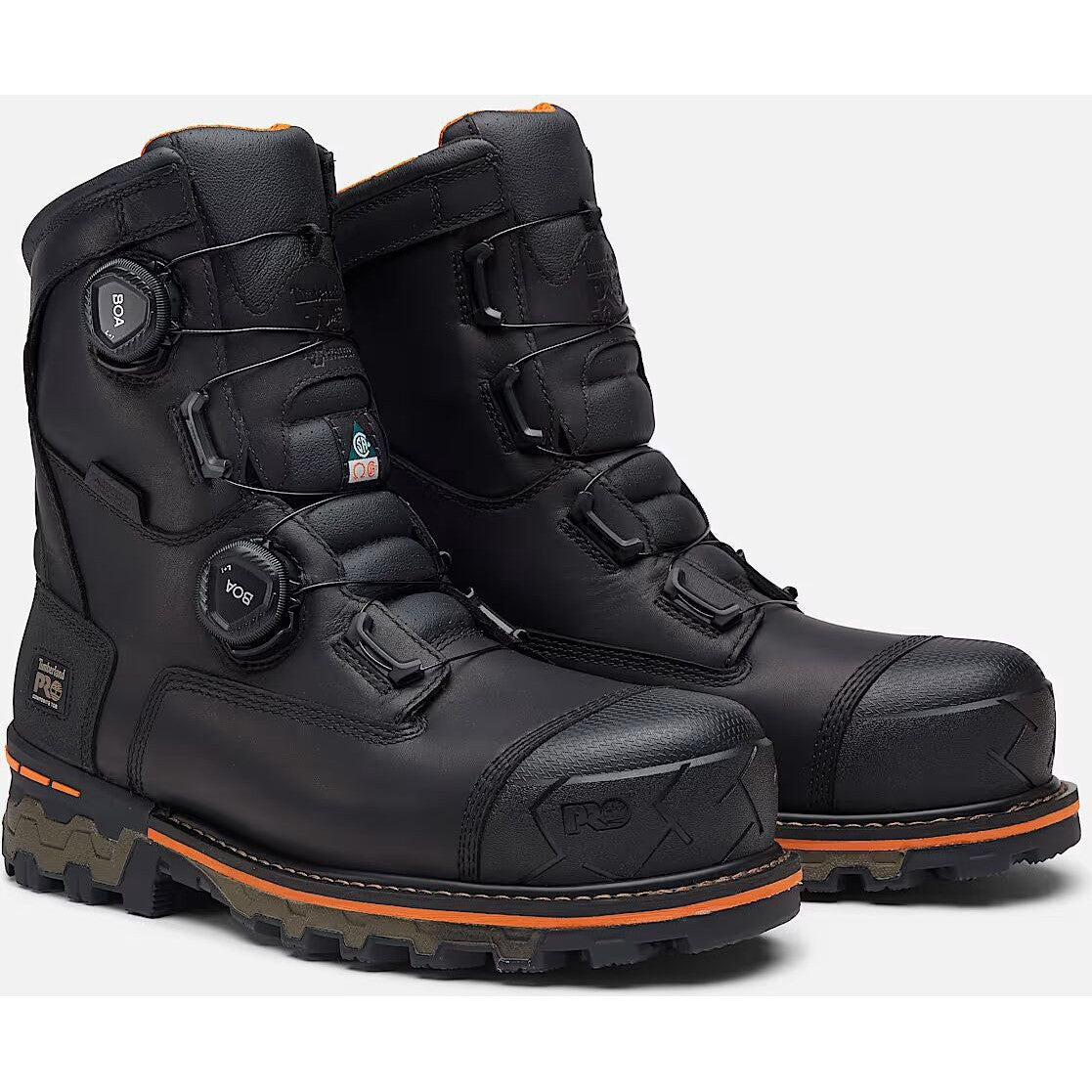
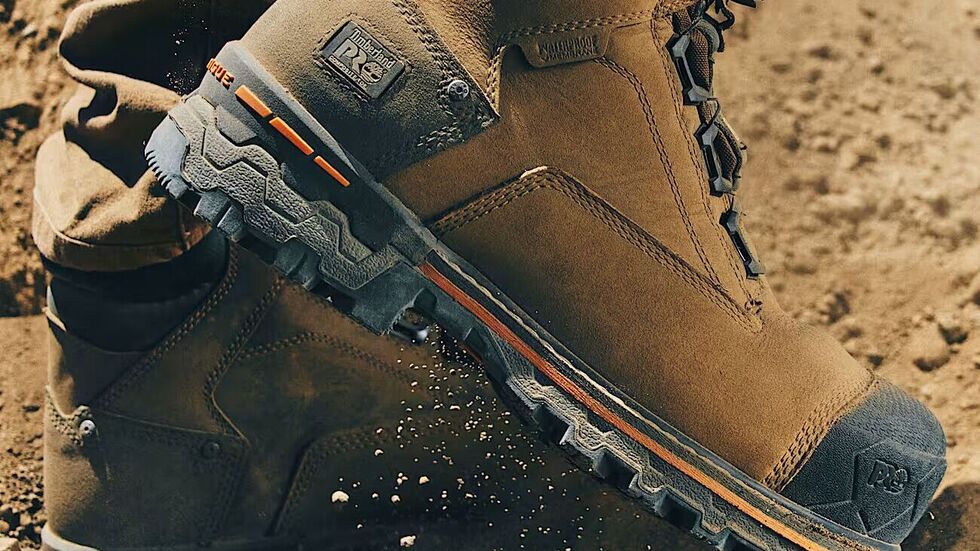
Short answer: men's Timberland PRO work boots usually fit true to size, sometimes slightly large to leave room for thick work socks. If you wear a size 10 in other work boots, start with a 10.
The longer answer matters too, because fit shifts depending on the model, the toe type, your foot width, and what you wear inside the boot. A soft-toe Powertrain feels different from a steel-toe Boondock at the same nominal size. Rather than blindly sizing up or down, use your normal work boot size as the baseline and adjust from there.
Start With Your Usual Work Boot Size
If you already wear work boots daily, that size is your baseline. Timberland PRO is engineered as work footwear, so the fit tracks closer to other work boots than to casual sneakers. Don't size up just because the boots look bulky.
What you're actually checking for is enough toe room to flex and kneel without your heel sliding. A good work boot should hug the heel and midfoot, with breathing room at the toe box for walking, kneeling, and climbing.
When Timberland PRO Boots Feel Roomy
Some PRO styles run roomier in the toe box, particularly heavy-duty models built for long shifts. That isn't necessarily a problem. Feet swell over a workday, and a little room reduces rubbing under pressure. Roomier styles also handle thick socks better, which matters in cold weather or on long shifts standing on concrete.
The limit is heel slip. If your foot slides forward going downhill or up stairs, the boot is too loose. That's where you get heel rub, sore toes, and unstable footing on uneven ground.
Steel-toe and composite-toe boots feel more structured up front because the toe cap doesn't stretch the way leather does. If your toes are pressing against the safety cap, that won't break in. You need a wider size or a different style.
Match the Boot to the Work, Not Just the Size Chart
Construction, landscaping, farming, and outdoor maintenance all involve uneven ground, mud, and water. Those jobs call for a secure heel and adequate toe room. Waterproof linings and safety toes also change how a boot feels. Waterproof membranes can make the upper feel snugger, and safety caps reduce flex at the front.
Warehouse, shop floor, delivery routes, and light industrial workspaces place greater emphasis on flexibility and lower boot weight. A lighter Powertrain or Setra Series-style shoe feels noticeably different from a heavier Boondock or Direct Attach, even at the same nominal size. The lighter model often feels closer to a true sneaker size, while the heavier ones sit closer to traditional work-boot sizing.
Check Width Before Adjusting Length
A lot of sizing mistakes start as width problems people treat as length problems. If a boot feels tight along the sides of your foot, sizing up usually makes it worse. You end up with a longer boot that's still narrow, plus heel slip and dead space at the toe.
Look for a wide (W or EE) version of the same size instead. This matters most with safety toes, where the front has less give than a soft-toe leather upper.
Account for Socks and Insoles
Socks are part of the fit. The same boot feels different over a thin liner sock and a heavy wool work sock. If you wear thick socks every day, try the boot on with those socks, not the dress pair you happen to have on.
Same goes for aftermarket insoles. A thicker insole lifts your foot into the boot and can noticeably tighten the toe box and instep. Test the boot with whatever you actually plan to wear inside it.
A good fit feels firm, not cramped. Your heel stays put, your toes don't hit the front, and the widest part of your foot doesn't get squeezed.
[prc-collections-carousel]
How to Measure Your Foot at Home
If you're buying online and aren't sure of your size, measure before you order. Stand on a piece of paper with your weight evenly distributed, trace around your foot, then measure heel-to-longest-toe in inches. Do this late in the day, when your feet are at their largest, and wear the socks you'd actually wear with the boots. Compare against Timberland's official size chart rather than guessing from a sneaker size. For a deeper walkthrough on measuring your feet and choosing the right size, see our complete work boot sizing guide.
How to Tell if the Fit is Right
Don't judge fit sitting down. Stand, walk, bend your knees, and run a flight of stairs if you can. Your feet load differently under body weight than at rest.
A good fit means:
- Toes have a little room to move
- Heel doesn't lift much when you walk
- The sides feel secure without pinching
- The safety toe doesn't press against your toes
- The boot feels stable, not wobbly
- No sharp pressure points anywhere
Some stiffness is normal in a new work boot. Pain, numbness, and direct toe pressure are not, and those won't break in.
The Bottom Line on Timberland PRO Sizing
Timberland PRO usually fits true to size, but the right call depends on the model and how you wear it:
- Start with your regular work boot size.
- Go up a half size if you wear thick socks, use aftermarket insoles, or sit between sizes.
- Choose a wide (W/EE) size if the pressure is across the foot rather than at the toe.
The boot you want is the one that gives you a secure heel, room at the toe, and no pressure from the safety cap. Look for a fit that's still comfortable at hour ten, not just hour one.
Frequently Asked Questions
Do Timberland PRO Boots Fit True to Size?
Most PRO models fit close to true size. If you wear a size 10 in other work boots, start there. Fit can shift slightly based on the specific model, toe type, foot width, sock thickness, and whether you add aftermarket insoles.
Should I Size Up in Timberland PRO Work Boots?
Only if one of these applies: you're between sizes, you wear thick socks daily, you use thick aftermarket insoles, or you prefer extra toe room. If the boot feels tight across the sides of your foot, the answer is a wide (W/EE) size, not a longer one.
Do Timberland PRO Steel Toe Boots Feel Tighter?
They feel firmer at the front because the safety cap doesn't stretch the way leather does. Your toes should never press against the cap. If they do, try a wider width or a different PRO model. That pressure won't break in.