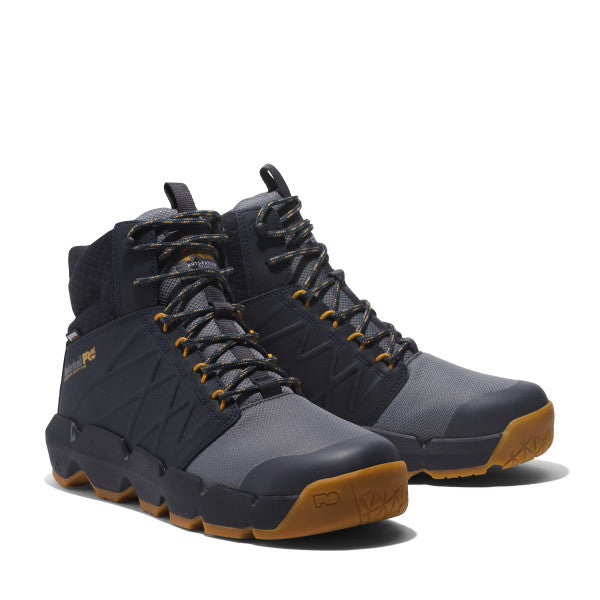
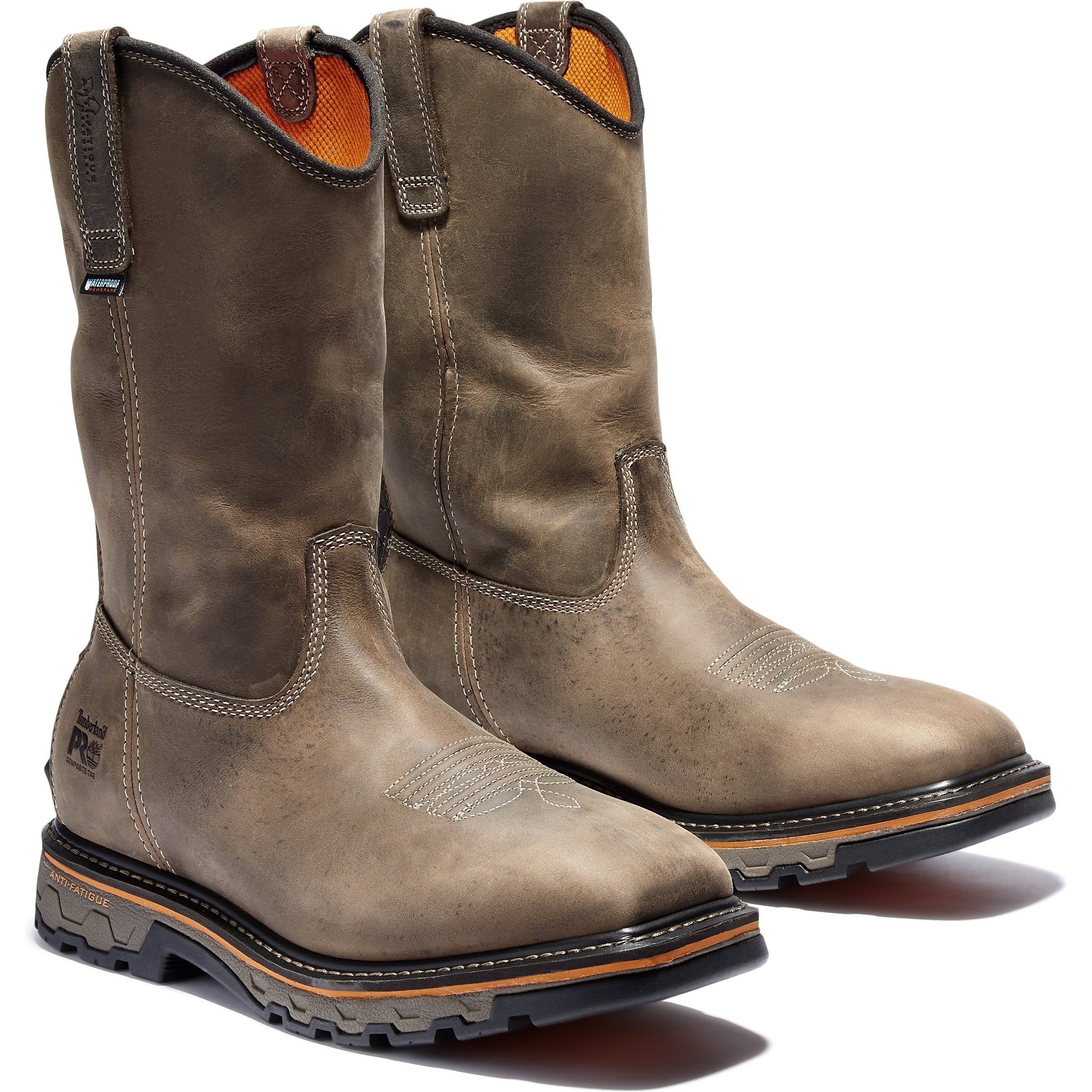
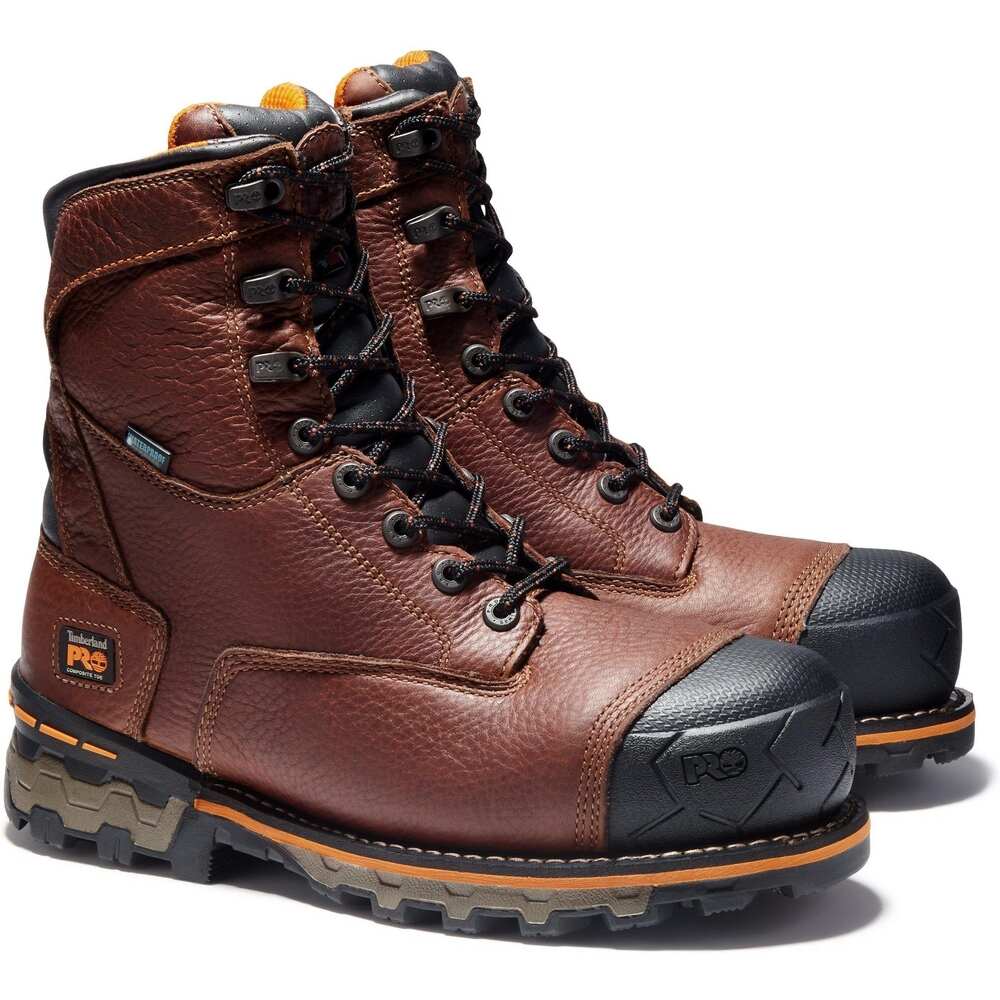
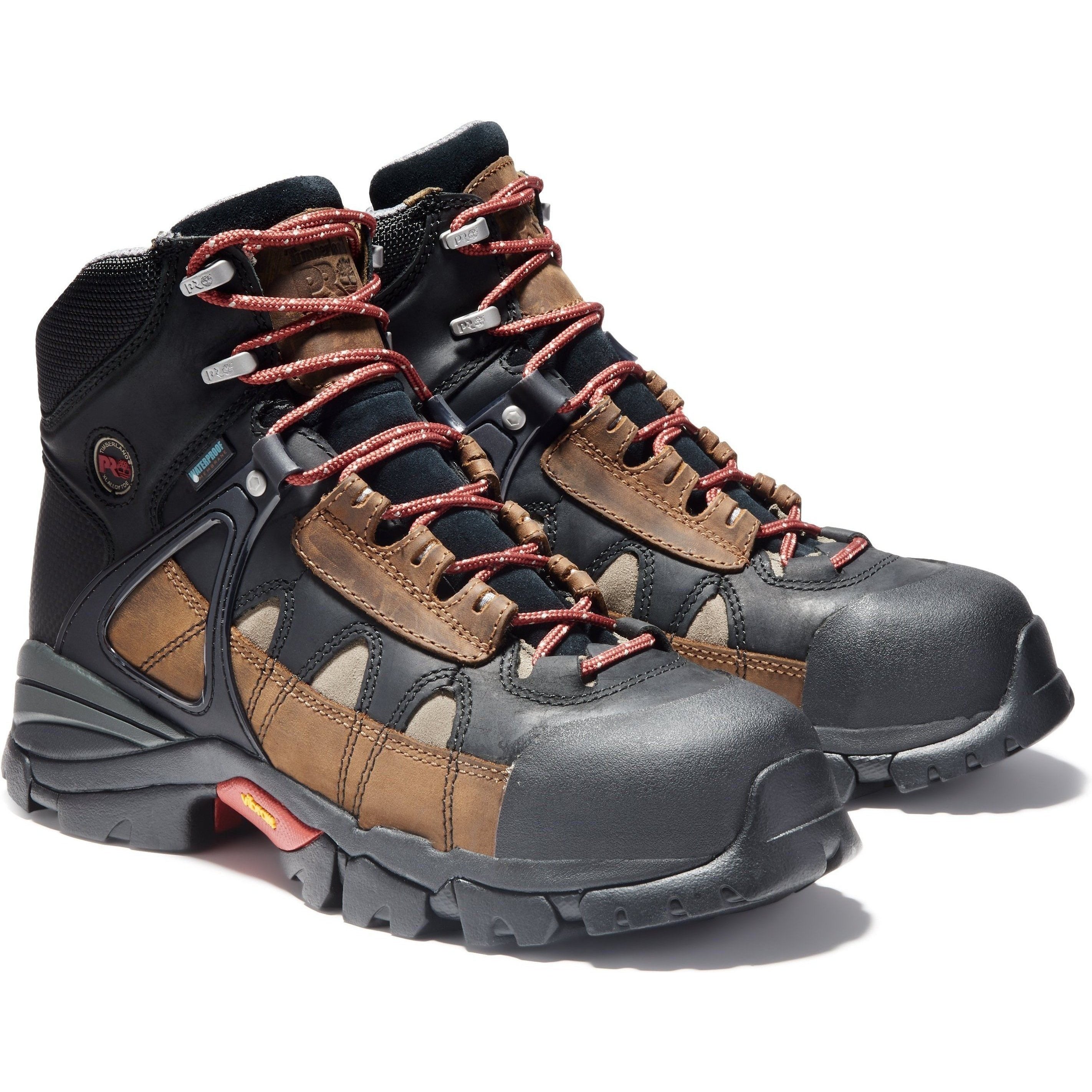
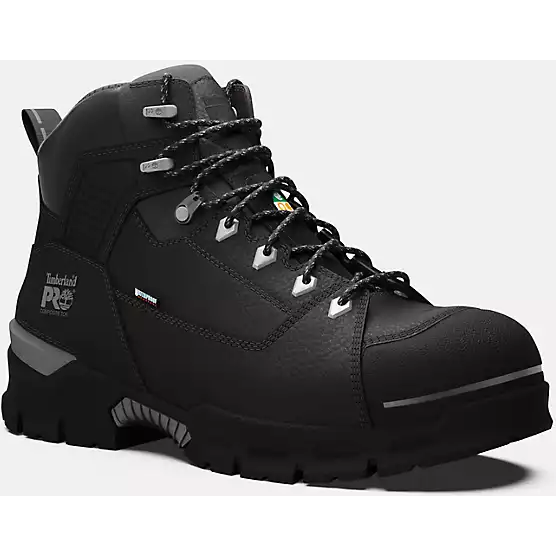
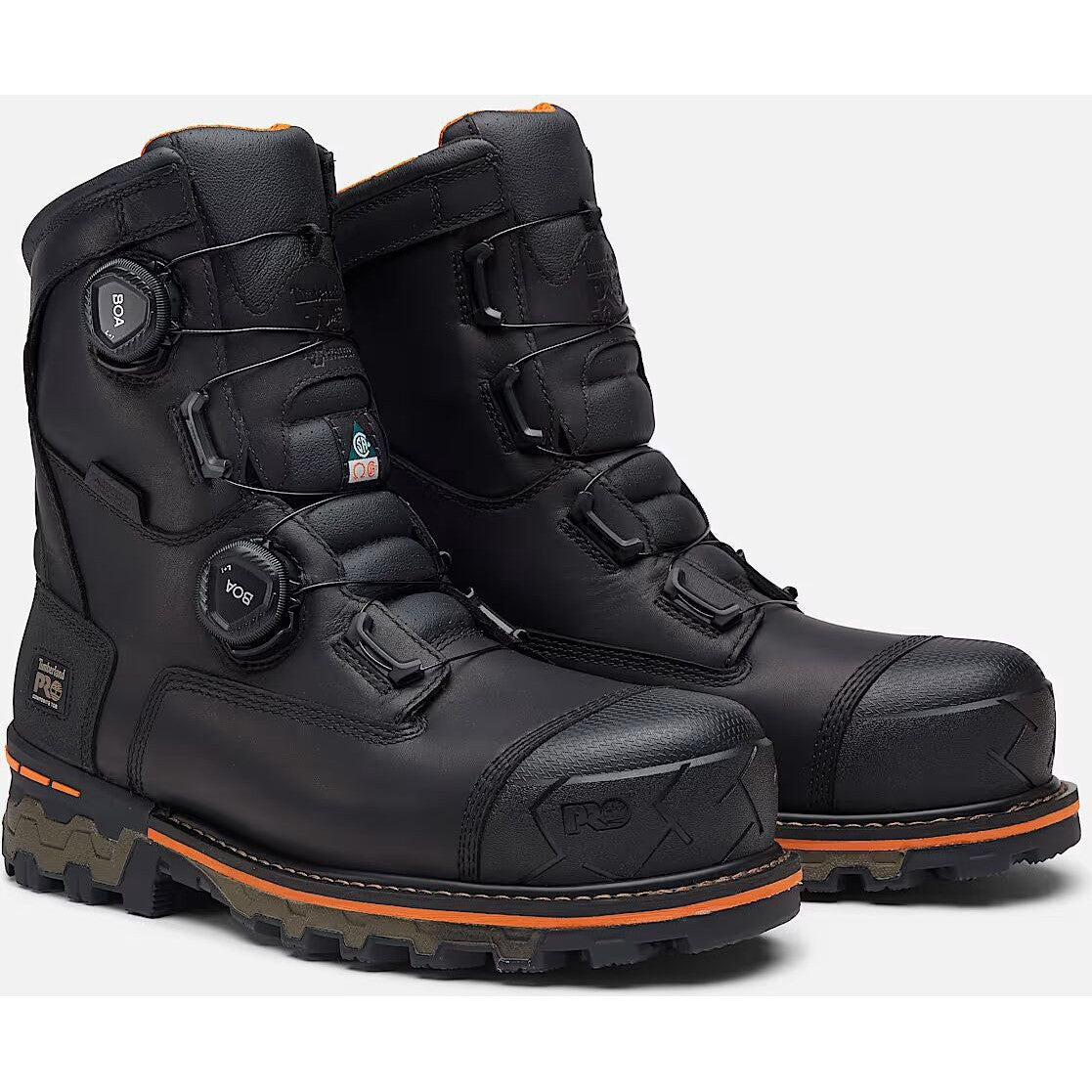
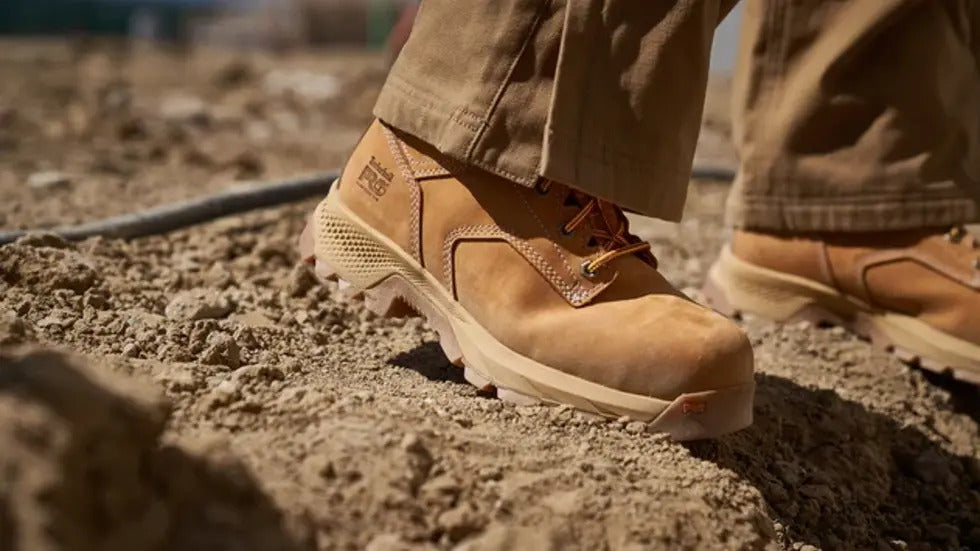
Timberlands are good work boots, but it depends on the model. Standard Timberland boots are better suited for casual wear, outdoor use, and light-duty tasks. They are not always the right choice for jobs that require safety footwear.
For work, Timberland PRO is the line to consider. These boots are built for jobsite needs, with options for steel toe, composite toe, alloy toe, waterproof protection, insulation, slip resistance, metguard coverage, and electrical hazard protection.
Timberland boots are good for work when you choose the right Timberland PRO model for the job. The best boot depends on your work environment, safety requirements, weather conditions, and comfort needs.
For most workers, Timberland PRO safety boots are the practical choice because they are built for work conditions, not just everyday wear.
Timberland vs. Timberland PRO
It comes down to construction.
Standard Timberlands are made for general wear. Timberland PRO boots are made for work. The difference shows when the boot has to handle safety requirements, long shifts, wet ground, hard surfaces, and repeated wear.
The Timberland name creates confusion here. A standard boot looks durable, but jobsite use demands more than a leather upper and a familiar brand. Work conditions bring specific requirements. Toe protection, slip resistance, waterproofing, insulation, puncture resistance, and electrical hazard protection all matter depending on the job.
Timberland PRO belongs in the same category as purpose-built work boots because the line is built around protection, support, traction, and daily jobsite use. That is the real comparison to make when deciding whether Timberlands are worth buying for work.
Are Timberland PRO Boots Protective Enough?
Timberland PRO safety boots offer enough protection for demanding work, but the exact model matters.
Protection is where Timberland PRO separates itself from standard Timberland styles. The line includes steel toe, composite toe, alloy toe, metguard, puncture-resistant, slip-resistant, waterproof, insulated, and electrical hazard options.
OSHA requires protective footwear when workers face foot injury risks from falling or rolling objects, punctures to the soles, or electrical hazards. Protective footwear must also meet recognized standards or provide equivalent protection.
The feature set matters more than the brand name alone.
Steel toe Timberland PRO models make sense when impact and compression protection are required on the job. They should be compared with other steel toe boots for fit, outsole, waterproofing, and shift comfort.
Composite toe Timberland PRO models fit work where toe protection still matters, but lower weight, less metal, and reduced temperature transfer are part of the decision. They are worth comparing with other composite toe boots, especially for long shifts or changing temperatures.
The point is not that one toe type is always better. The right option depends on the job requirement and how the boot feels after hours of wear.
[prc-collections-carousel]
Where Timberland PRO Makes the Most Sense
Timberland PRO works best when the job calls for a balance of protection, comfort, and availability.
The line fits common work conditions across construction, warehouse, manufacturing, maintenance, utility, landscaping, outdoor labor, and general trade work. Different roles place different demands on a boot, so it helps to think through the work conditions before choosing a model.
Waterproof Timberland PRO boots make sense for wet ground, rain, mud, washdown areas, and outdoor work. Insulated Timberland PRO boots are built for cold-weather shifts. Steel toe and composite toe models meet common safety toe requirements. Soft toe models work when toe protection is not required, but support and durability still matter.
Boot format also affects the workday. Lace-up Timberland PRO styles give a more controlled fit around the ankle and instep. Pull-on Timberland PRO boots are ideal for crews who value fast entry, easy removal, waterproof protection, and reduced lace maintenance. They are worth comparing with other pull-on work boots when convenience and coverage both matter.
This is also where Timberland PRO has an advantage as a collection. The line is broad enough to compare job conditions rather than forcing a single boot style to fit every type of work.
Are Timberland PRO Boots Comfortable for Long Shifts?
Comfort is one reason Timberland PRO remains in the work-boot conversation.
Long shifts expose a weak boot design. Concrete floors, ladders, uneven ground, and repeated kneeling all put pressure on the foot, ankle, and outsole. A boot feels fine at the start of the day and still fails the shift when it lacks support, cushioning, or stability.
Many Timberland PRO models focus on underfoot support, shock absorption, and stable outsole construction. Anti-Fatigue Technology footbeds absorb shock and return energy on each step, though comfort still depends on fit and work conditions.
Width, toe shape, arch support, boot weight, break-in feel, sole stiffness, and waterproofing all affect how the boot performs. Waterproof boots run warmer. Insulated boots are too much for most indoor work. Steel toe boots feel different from composite toe boots. Wedge soles and heeled soles handle surfaces differently.
The right Timberland PRO boot should match the shift, not just the size.
Are Timberland PRO Boots Durable?
Timberland PRO boots are built for work use, but durability depends on the model and environment.
A boot used in a warehouse will not wear the same as a boot used in concrete, mud, oil, gravel, roofing, or utility work. That is why the construction details matter. Full-grain leather uppers, reinforced toe areas, rubber toe guards, slip-resistant outsoles, waterproof construction, puncture-resistant plates, stable heel support, and abrasion-resistant outsole materials all affect service life.
Timberland PRO is worth considering when those features match the job. It is not worth buying based on the Timberland name alone. The boot has to fit the work, the surface, and the way it will be worn day after day.
The Verdict
Timberland PRO safety boots are good work boots for many trades and jobsite conditions. Standard Timberlands are better for casual wear and light-duty use. Timberland PRO is the work-focused line built for safety features, long shifts, weather exposure, and daily wear.
For workers comparing brands, Timberland PRO is worth comparing against other work boot options. The right pair comes down to toe type, waterproofing, outsole, insulation, fit, and job demands. Start with the work requirement, then choose the Timberland PRO boot that matches it.
Frequently Asked Questions
Which Timberland boots are Actually Made for Work?
Timberland PRO is the work-focused line. Standard Timberland boots are better for casual wear, outdoor use, and light-duty tasks. Timberland PRO models are built around jobsite features such as safety toes, waterproofing, slip resistance, insulation, metguard coverage, and electrical hazard protection.
Where Does Timberland PRO Fit Against Other Work Boot Brands?
Timberland PRO is best suited as a practical work boot option for crews who need safety features, comfort, and broad model availability. The line is worth comparing with other work boot brands when the job calls for waterproof protection, safety toe coverage, long-shift comfort, or a specific style such as lace-up, wedge sole, or pull-on.
Is Steel Toe or Composite Toe Better in Timberland PRO?
Steel toe is the better fit when impact and compression protection are the priority. Composite toe is a practical option when toe protection is still required, but lower weight, less metal, and reduced temperature transfer matter during the shift.
Are Timberland PRO Boots Good for Standing All Day?
Many Timberland PRO boots are built for long shifts, but comfort still depends on fit, weight, outsole type, and work surface. Concrete floors, ladders, uneven ground, and repeated movement all affect how a boot feels after several hours.