Frequently Asked Questions
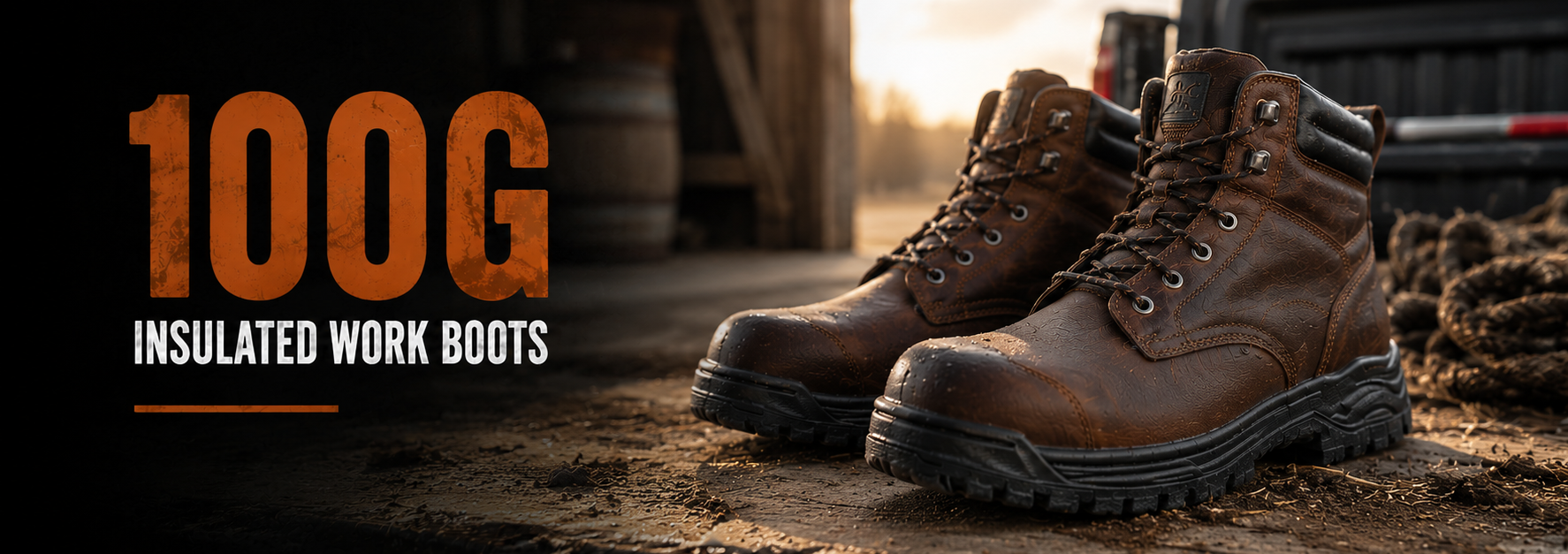
In 100G insulated boots, 100G is the insulation weight — the lightest common level. It adds a thin layer of warmth for cool mornings and high-output work without the bulk or heat of heavier boots, so active feet don't overheat.
100-gram boots suit cool-but-not-frigid conditions and active use, roughly the 40–60°F range when you're on the move. They're built for shoulder-season comfort more than deep-winter warmth, so for hard freezes you'll want a heavier weight.
They're ideal for workers and hunters who stay active and generate their own body heat — early-season hunts, brisk fall job sites, and anyone who runs warm. If you stand still for long stretches in the cold, step up to a heavier insulation weight.
Choose 100G for mild cool weather and high activity, and 200G for a little more margin on colder mornings or slower work. The more you move, the less insulation you need — too much can leave feet damp and cold later. See our 200G insulated boots for the next step up.
Yes, many include soft toe, steel toe, or composite toe builds, so you can pair light insulation with ASTM-rated impact and compression protection on the jobsite. Check each product's specs for its exact rating.
With light insulation, your normal work-boot size and a standard sock usually fit true. If you add a thicker sock on cold mornings, leave enough toe room to keep circulation free — snug boots actually make feet colder.
Recently viewed
Our Top Brands